
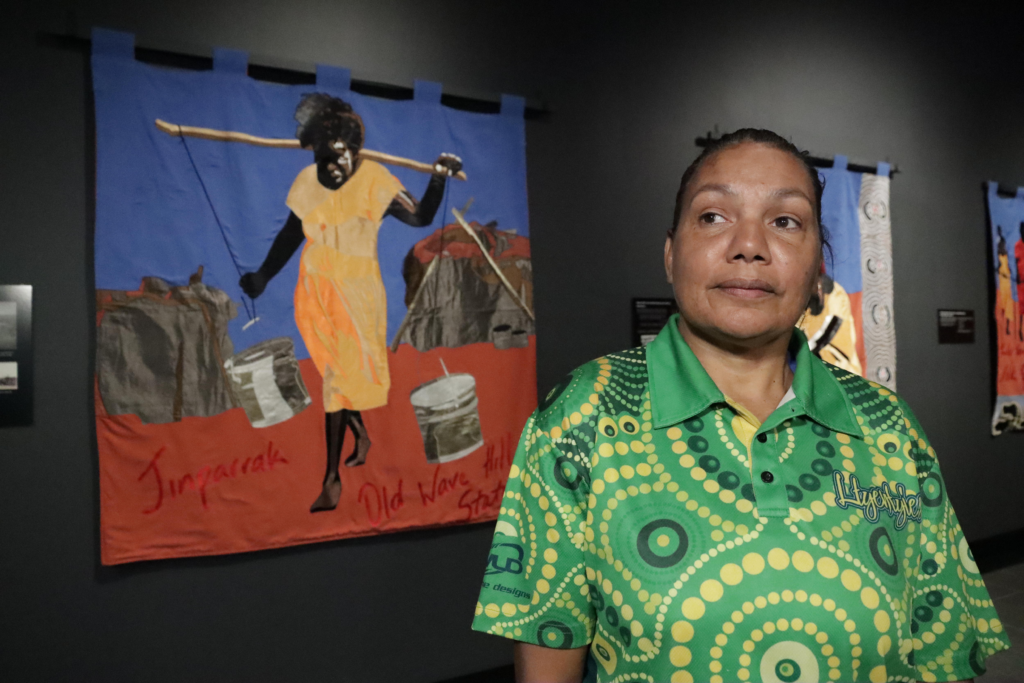


A 2023 exhibition in Darwin presented ten textile banners created by approximately 35 Gurindji people to tell the history of the Wave Hill Walk-Off from their own perspective.
The banners were made in 2000 and later placed in the care of the Karungkarni Art and Culture Centre.
Hardship, labour and the return of land
In 1966, around 200 Aboriginal workers and their families left Wave Hill station under the leadership of Vincent Lingiari in protest against exploitative conditions.
The action continued for eight years and became a major moment in the struggle for Aboriginal land rights.
Artist Leah Leaman’s grandmother, who participated in the walk-off, appeared on one banner carrying water on her back. For Leaman, the image recorded the hardship experienced by Gurindji people and the importance of ensuring that the story was not forgotten.
History told by those who lived it
Curator Joanna Barkman had been involved in developing the banners and emphasised the difference between external accounts and Gurindji people narrating the events themselves.
The walk-off had entered Australian culture through books and songs, but the banners created a visual history controlled by the community.
Over two decades, the works travelled in bags and plastic containers between Darwin and Kalkarindji. They were displayed in outdoor community settings, including Freedom Day celebrations and commemorations following the death of former prime minister Gough Whitlam.
The gallery presentation allowed the banners to be seen together under conditions designed for their preservation.
The Karungkarni Art and Culture Centre hoped eventually to establish a permanent keeping place on Gurindji Country.
The exhibition showed that the banners were not simply illustrations of a completed political event. They remained active cultural objects carrying family memory, land history and the community’s continuing authority over its own account.