
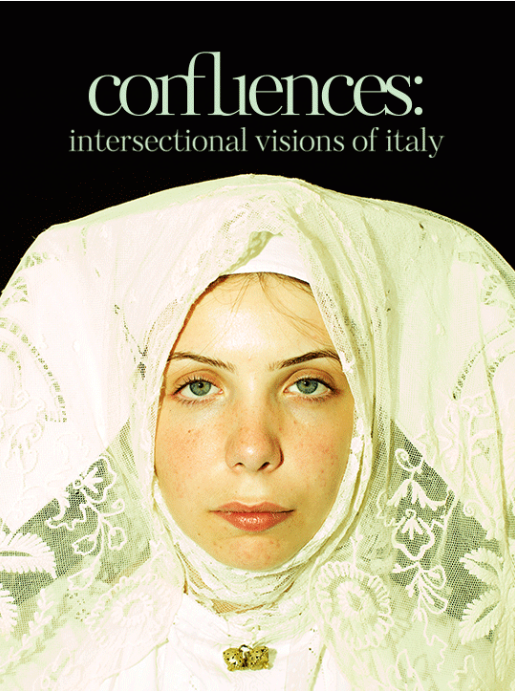


Confluences: Intersectional Visions of Italy at Georgetown University’s De La Cruz Art Gallery brought together seven artists whose work questioned simplified ideas of Italian identity.
Curated by Ilaria Conti, the exhibition addressed colonial history, migration, language, gender, regional difference and civic activism.
Seven artists, multiple Italies
Dafne Boggeri examined publishing history, while Valeria Cherchi addressed kidnapping in Sardinia.
Giulia Crispiani explored regional fragmentation, Maria Adele Del Vecchio drew on Italian feminist literature, and Binta Diaw focused on Italians of African ancestry.
Alessandra Ferrini addressed the legacy of Italian colonialism in North and East Africa, while Muna Mussie examined the role of language in shaping identity.
Against a single national narrative
The exhibition treated Italy not as a homogeneous cultural space but as a network of overlapping histories, languages and identities.
Its curatorial structure connected works that would not necessarily be shown together, using their differences to expose gaps in familiar national narratives.
Confluences suggested that identity is produced through intersections between place, memory, language, race, gender and historical experience rather than through a single stable definition.