
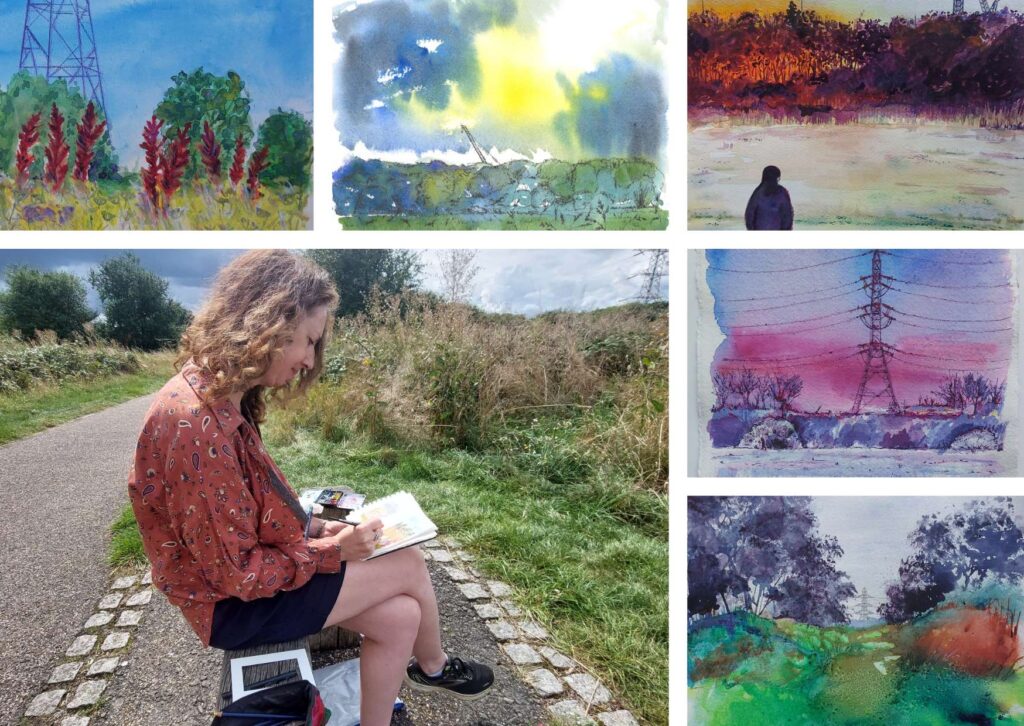

In Power of the Marshes, mixed-media artist Samantha Schneider turned repeated visits to Tottenham Marshes into a study of the relationship between natural and industrial landscape.
Working mainly with watercolour, acrylic and ink, Schneider developed the exhibition from outdoor drawing and painting around the Lea Valley.
Looking again at familiar infrastructure
During the pandemic, the marshes became an important local landscape for the artist.
Her attention gradually shifted toward views where reeds, water and seasonal vegetation coexist with pylons, cranes and other industrial structures.
Rather than treating those elements as interruptions to nature, Schneider began to see them as forms with their own visual character.
Many works were made from the same viewpoints, allowing autumn and winter scenes to record changes in colour, light and vegetation over time.
Materials connected with place
Schneider often works outdoors and sometimes uses found objects such as sticks as drawing tools.
That physical connection with the landscape complements the fluid qualities of watercolour and ink.
Power of the Marshes was built around the tension, and possible harmony, between a wetland environment and the infrastructure surrounding it.
Instead of presenting the marshes as untouched nature, the exhibition recorded a landscape shaped simultaneously by ecology, industry and everyday urban life.