
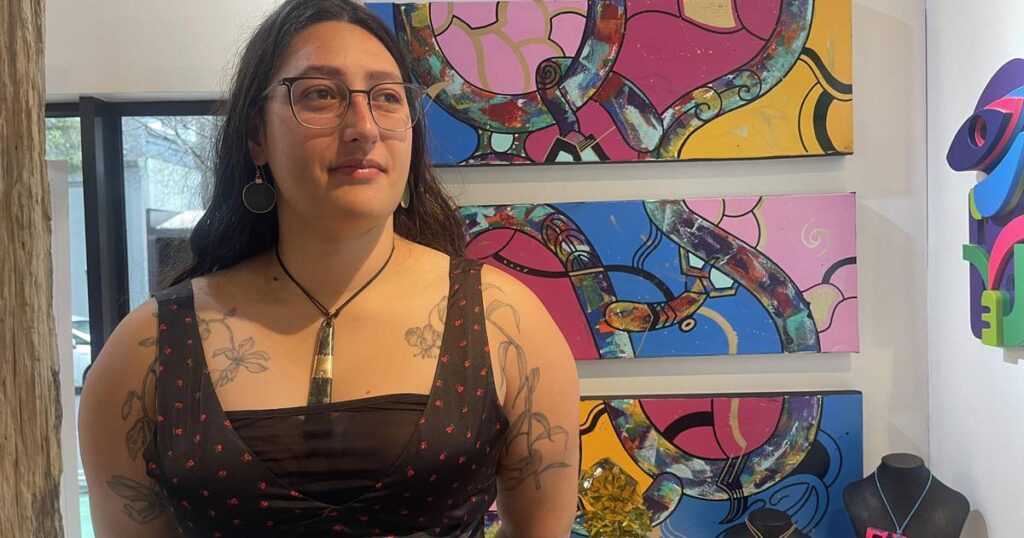


A 2023 exhibition brought together contemporary Māori artists around the many forms and meanings of Tiki.
Curated by Sera Clifton, the display included work by Ngāti Porou artist Esther Stone and other practitioners working through toi Māori.
Tiki as more than a familiar symbol
Tiki is one of the most widely recognised Māori forms, but its public visibility can reduce it to a decorative image associated with tourism or kiwiana.
The exhibition sought to restore the cultural and spiritual practices connected with the form.
For Māori artists, Tiki can carry relationships with ancestry, identity, protection and inherited knowledge.
Its meaning changes according to material, regional tradition, artistic intention and the context in which it is made or worn.
Contemporary artists continuing a living practice
Stone’s participation placed her work within a group of artists interpreting Tiki through current creative practice rather than reproducing one standardised image.
The available source did not provide enough detail to analyse individual works or techniques closely.
Its curatorial purpose was nevertheless clear: to promote Māori artists and make visible the spiritual and cultural dimensions behind an image often detached from its origins.
The exhibition challenged audiences to look beyond immediate recognition.
A Tiki is not meaningful simply because its outline is familiar. Its significance depends on the relationships, stories and responsibilities carried by the maker and community.
By presenting several contemporary interpretations together, the exhibition showed a visual tradition continuing to develop rather than remaining fixed in the past.