
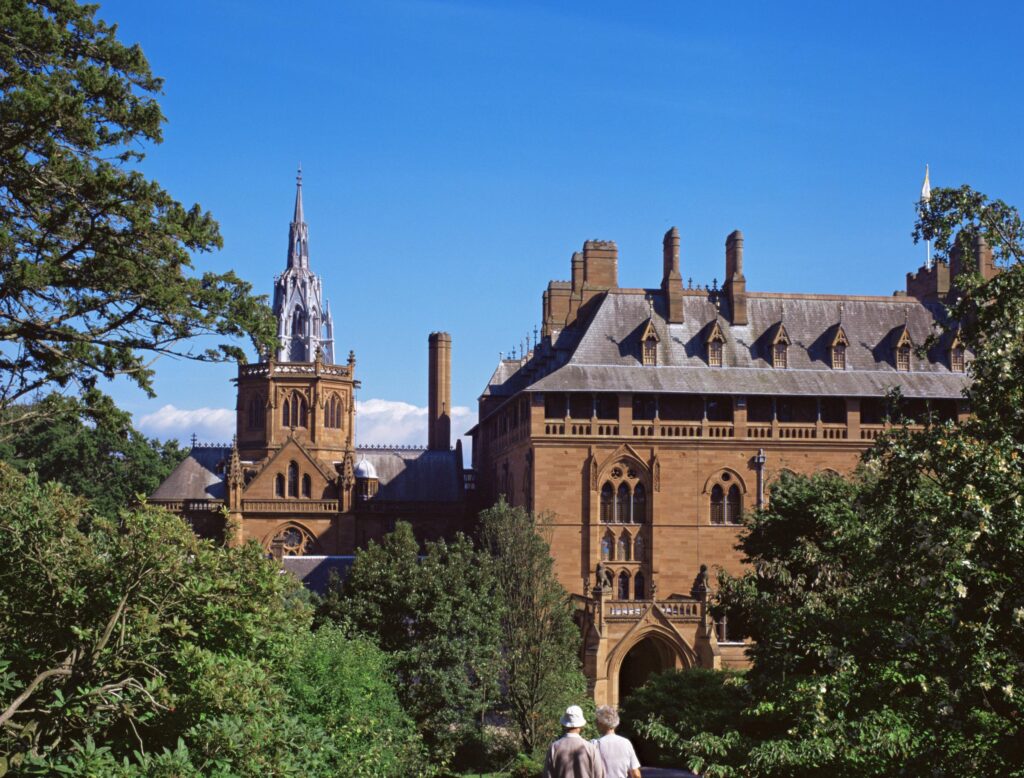


Mount Stuart is a neo-Gothic mansion on the Isle of Bute, sitting between Glasgow, Argyll and Ayrshire on the Firth of Clyde.
Since 2001, the building has provided both the inspiration and location for an acclaimed Contemporary Visual Arts Programme.
The programme enables the trust to promote and facilitate interest in the contemporary visual arts and brings exhibitions of international standard to Bute and Argyll. Each exhibition is complemented by a programme of events, publications and educational activities.
Akhavan’s exhibition is very much residency-based, as the artist’s practice is influenced by the application of considered time and research at a specific location.
He has undertaken travels on a regular basis to immerse himself in residencies in places such as Fogo Island in Canada, Atelier Calder in France, Flora ars+natura in Colombia and the Delfina Foundation, based in the UK.
Inspired by his explorations of the gardens at Mount Stuart, Akhavan’s installation in the vaulted sandstone crypt titled Variations On A Folly”, incorporates elements from the surrounding areas into the underbelly of the house.
The new work reflects the artist’s ongoing explorations into spaces and species from nearby grounds, and the domesticated landscapes and woodlands at Mount Stuart.
The project continues with an audio work to be experienced during a walk from the house through the grounds, past meandering streams to the vegetable gardens.
Akhavan’s works range from installations to drawings, videos, sculptures and performances. The direction of his work has been deeply influenced by the specificity of the sites where he create, the architectures that house them and the people that frequent them.
To find out more information, visit mountstuart.com
This content was originally published here.