
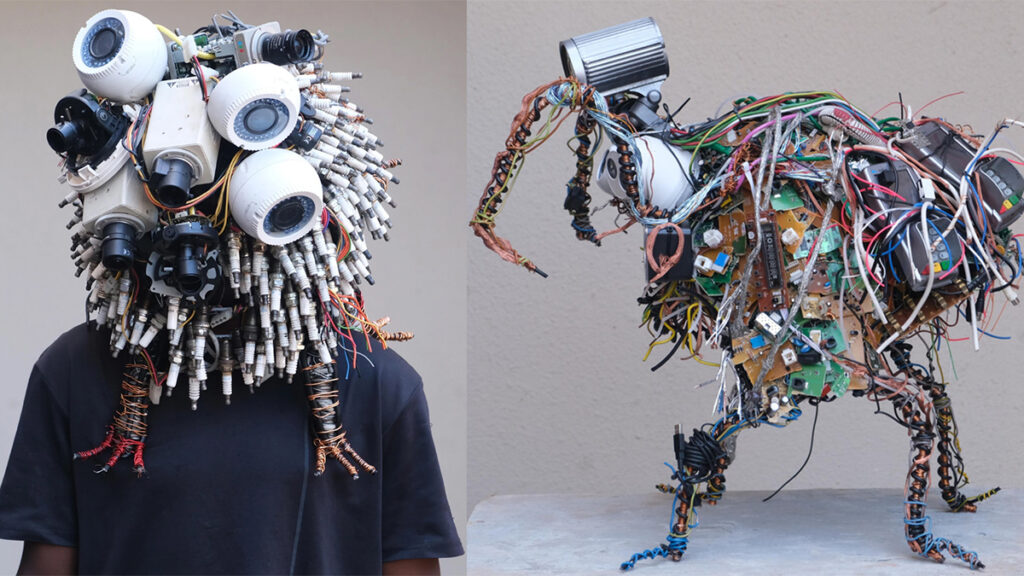


The 2023 exhibition Drowning Planet transformed discarded electronics into artworks intended to expose the growing environmental cost of electronic waste.
Presented at Absa Towers North in Johannesburg, the project was developed by the art initiative You Made This with technology-reuse specialists.
Obsolete devices becoming visible material
The works were made from components and objects that had reached the end of their expected commercial life.
By reorganising them as sculpture and installation, the artists made visible a waste stream that often disappears into storage, informal disposal or distant processing sites.
The exhibition connected the material remains of phones, computers and other electronics with the speed at which consumers replace devices.
Art arguing for a circular economy
Organisers cited an estimated 53.6 million metric tonnes of electronic waste generated worldwide in 2020.
E-waste contributes to greenhouse-gas emissions and can release toxic substances into air, water and soil when handled improperly.
The exhibition promoted repair, refurbishment, reuse and responsible recycling rather than treating disposal as the inevitable end of technological ownership.
Its corporate setting carried an unavoidable promotional dimension, but the artworks allowed the argument to be encountered materially.
Visitors could see the density, colour and complexity of objects usually valued only while they remained functional.
Drowning Planet used transformation as both method and message. Electronics designed to become obsolete were given another temporary life as art, while the exhibition asked whether the economic systems producing them could be redesigned around longer use and recovered materials.