
A London exhibition in 2022 brought together miniature sculpture, staged photography and tiny narrative scenes by more than 30 international artists.
Small is Beautiful: Miniature Art Exhibition opened in South Kensington after an earlier presentation in Paris. The exhibition focused on artists who used reduced scale to transform familiar objects and everyday spaces into self-contained worlds.
Scale as a storytelling device
Miniature art has a long history extending through model-making, devotional objects and small-scale craft, but many of the artists in the exhibition developed their audiences through photography and social media. The display connected these contemporary practices with the older fascination of making complex worlds fit within a limited physical space.
Bosnian artist Jasenko Đorđević presented sculpture small enough to sit on the tip of a pencil. Peruvian artist Ana Sofia Casaverde worked through paper and miniature painting, using precision and scale to concentrate attention on details that could easily disappear in a larger work.
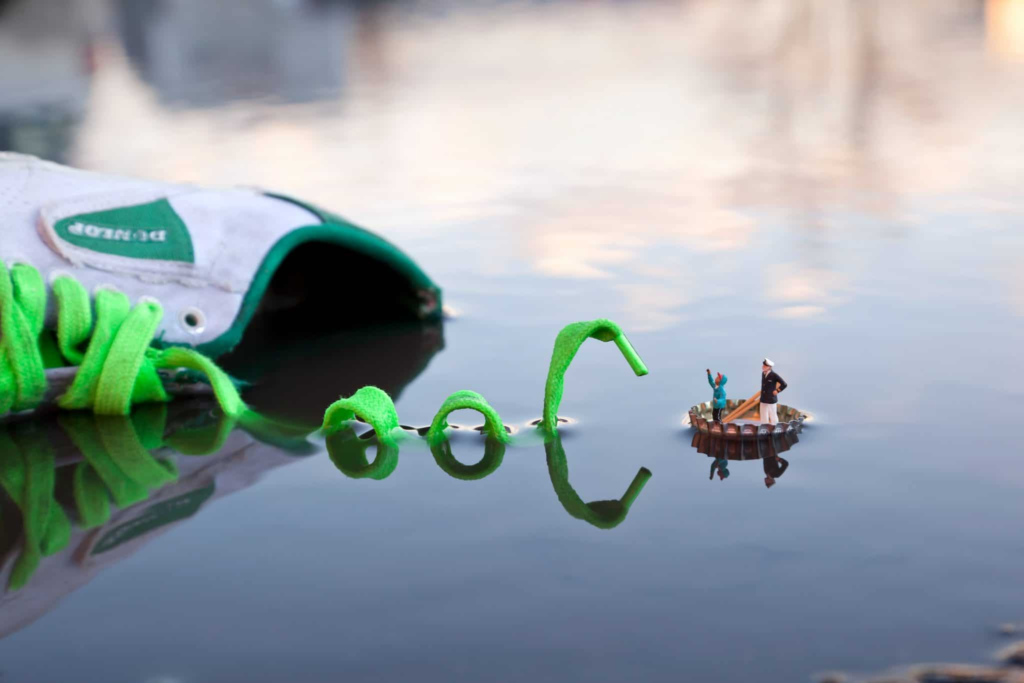
London-based artist Slinkachu approached the miniature through street photography and installation. He placed tiny figures in ordinary urban settings and used everyday materials to create dramatic situations. A green shoelace lying in a puddle, for example, could become a serpent confronting a mother and child.
Looking closely at ordinary objects
The exhibition relied on the tension between the small artwork and the viewer’s full-sized body. Visitors had to slow down, move closer and reconsider objects that would usually appear insignificant.
By reducing scale, the artists could turn familiar materials into landscapes, architecture or narrative props. The effect was often playful, but it also made the act of looking more deliberate.
Small is Beautiful demonstrated that miniature art is not defined only by technical virtuosity. Its power lies in the way it changes proportion, attention and imagination, allowing a minor object or a tiny figure to carry the weight of an entire scene.