

Urs Fischer’s 2022 exhibition Lovers brought together two decades of work through a non-chronological presentation designed around scale, material change and physical experience.
Shown in Mexico City from 2 April to 18 September, the exhibition included sculpture, photography, drawing, editions and painting. Rather than arranging the works as a conventional retrospective, it distributed different periods and media across three gallery levels.
Monumental form and unstable material
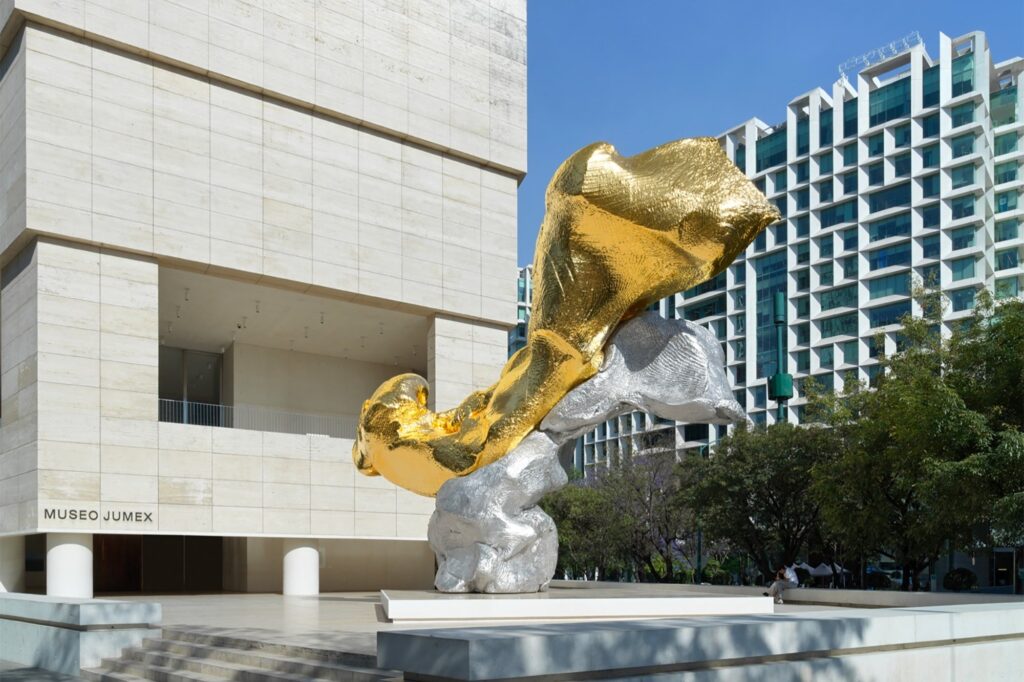
One of the exhibition’s central works was The Lovers #2, a sculpture approximately ten metres high made from stainless steel, cast aluminium and gold leaf. Its interlocking forms suggested the physical and emotional union of two people while giving the exhibition its title.
Elsewhere, Fischer’s wax sculptures introduced a different relationship to time. Designed to melt as they burned, the works changed throughout the exhibition and made duration visible through their gradual disappearance.
An exhibition organised through sensation
The second level included Melody, an installation of suspended drops that created the impression of rain. On the third floor, a garden setting brought together further sculptures and altered the atmosphere of the museum once again.
These contrasting spaces encouraged visitors to encounter the work through movement rather than chronology. Monumental metal, dissolving wax, suspended forms and garden elements produced a sequence of changing physical conditions.
Fischer has described art as an experience that should remain with the viewer rather than offer only a passing effect. Lovers reflected that position by combining intimate ideas with exaggerated scale and materials that appeared solid in one room and unstable in another.
The exhibition did not present 20 years of work as a linear account of artistic development. Instead, it treated Fischer’s practice as a field of recurring concerns, including transformation, desire, time and the uncertain boundary between ordinary objects and sculpture.