
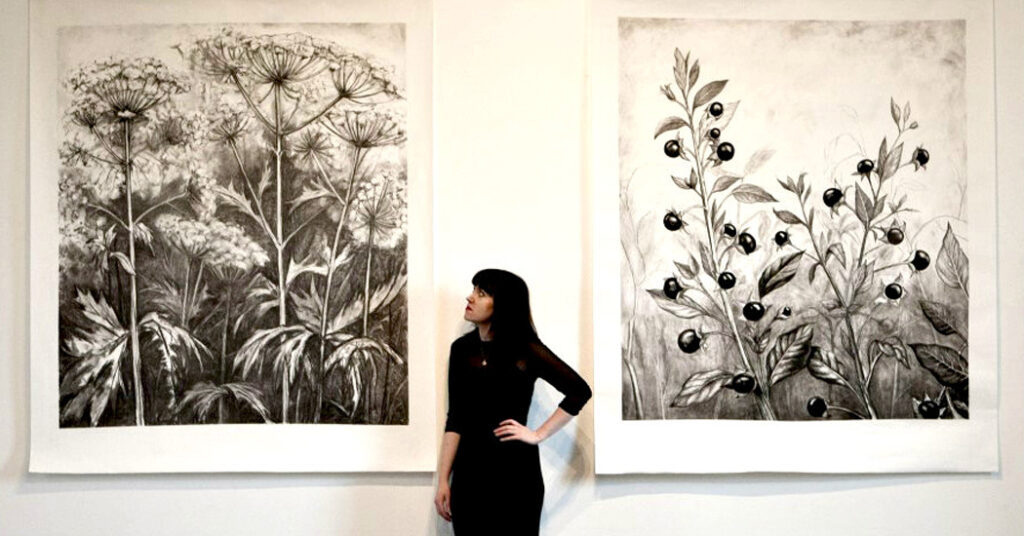
Louise Spokes’s first solo exhibition, The Seed That Stops The Heart, examined poisonous plants through drawings that moved between botanical beauty, bodily harm and historical intrigue.
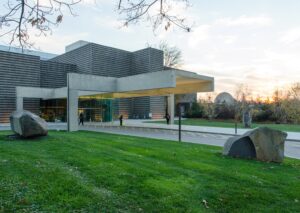
Presented at the Saldanha Gallery at Fort Dunree in 2022, the exhibition included new work on glass and paper.
Plants that can heal or kill
The title referred to seeds such as those of the foxglove, which can be fatal when consumed, while also suggesting the emotional “seed” of jealousy, anger or doubt that might lead someone to poison another person.
Spokes developed the series after the pandemic lockdowns, when she felt a desire to bring nature into her Glasgow apartment. Her first large pastel drawing focused on foxgloves.
The exhibition placed delicate botanical images beside drawings of blisters, burns and other injuries. Works were erased, redrawn and layered, producing contrasts between completed and partial forms, attraction and repulsion, light and darkness.
Folklore, power and contemporary danger
The artist drew on stories associated with Catherine de’ Medici, Locusta of Gaul and other figures linked with poison, court politics and betrayal.
She also referred to current examples, including claims about oleandrin during the Covid-19 pandemic and the severe burns caused by giant hogweed.
These references prevented the plants from becoming purely decorative subjects. Their beauty remained inseparable from chemistry, medicine, violence and misinformation.
Spokes had previously helped organise exhibitions for other artists through 126 Artist-Run Gallery in Galway. Presenting her own first solo show at Fort Dunree connected the new work with Donegal, where her family had roots and where she had spent significant periods of her life.
The Seed That Stops The Heart used botanical drawing to expose the unstable boundary between remedy and poison, fascination and fear.