
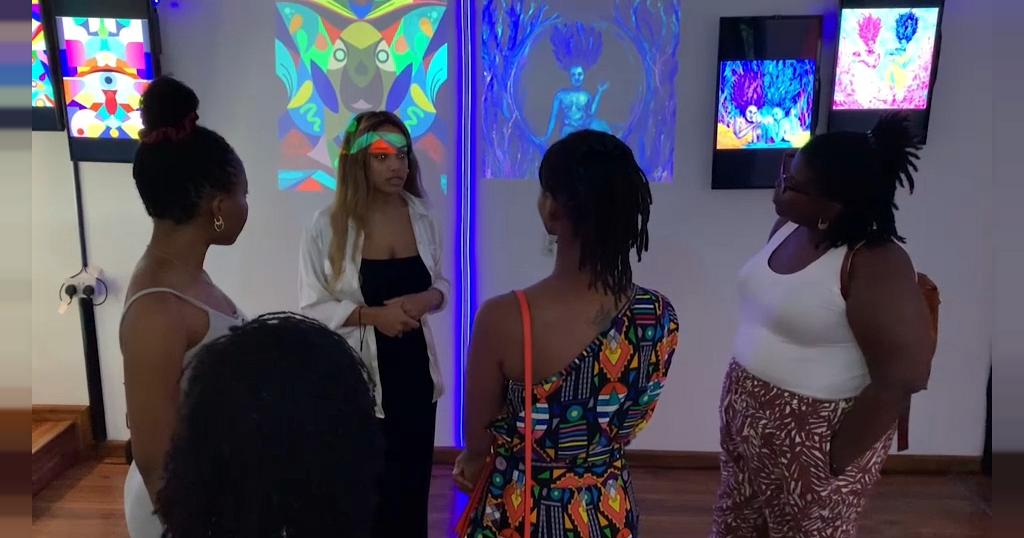


The Lagos exhibition Afrofutourism placed Black women digital artists at the centre of a conversation about technology, visual culture and imagined African futures.
Created by Nigerian curator Somi Nwandu, the international all-female exhibition was conceived as the first stage of a project intended to travel across Africa and beyond. Its emphasis was not simply on digital technique, but on the cultural perspectives carried through the work.
Reimagining African futures
The exhibition brought together images in which traditional settings, fashion and visual symbols met futuristic environments. Visitors encountered vivid colour, references to African identity and imagery associated with space, galaxies and speculative worlds.
This combination allowed the participating artists to treat the future as a space that could be designed from African experience rather than imported from elsewhere. Digital tools became a means of extending existing traditions of storytelling, portraiture and surrealism.
Artist Derek Jumbo described his practice as a form of surrealism operating in another dimension. He also argued that the knowledge developed through painting or sculpture could move into digital work, since the underlying principles of composition and artistic thought remained connected.
Bringing digital work into physical space
Nwandu believed that collectors and wider audiences needed to encounter digital art in person. Presenting the works within an exhibition environment gave them a physical presence and made their scale, colour and detail easier to experience collectively.
Visitor Hannah Udeh described the display as a meeting between older and newer forms, with African settings placed beside futuristic imagery. Her response captured one of the exhibition’s central ideas: digital art could expand cultural memory rather than replace it.
Afrofutourism also addressed the limited visibility of women of African descent within emerging digital-art networks. By making their work the exhibition’s defining focus, the project connected questions of representation with a broader debate about who gets to imagine and visualise the future.