

A 2023 exhibition at Apparao Gallery in Chennai placed accessibility at the centre of the viewing experience through work by ten artists with disabilities.
Organised with the non-profit Kai Rassi, the display included tactile painting, clay sculpture, Braille-based imagery, paper cutting and interactive work.
Art designed for more than sight
Eleven clay hand sculptures made by students from the Mary Clubwala Jadhav School for the hearing impaired formed the phrase “We are Hear” through American and Indian sign language.
Visual artist Shreya Chajjed led the project, helping students rehearse each sign before moulding their hands.
UK-based partially sighted artist Clarke Reynolds contributed a Braille puzzle accompanied by a reference sheet allowing visitors to decode the words on the canvas.
Betsy’s landscape was shown with a tactile version created by Access for All, enabling the composition to be encountered through touch.
Distinct practices rather than charitable display
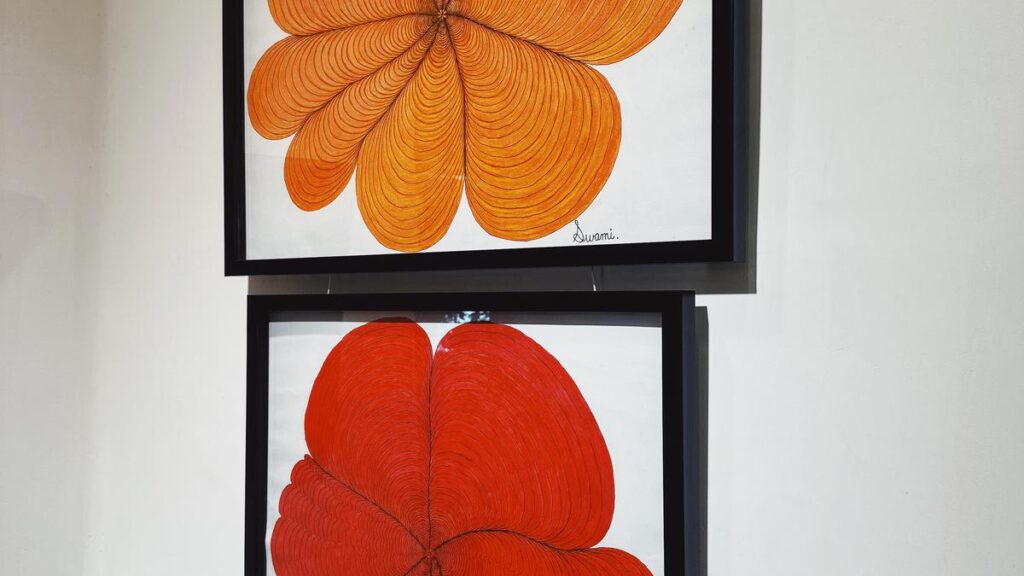
Aishwarya presented intricate paper-cut works built from concentric circles. Lokesh painted tigers and bulls, drawing on Indian national symbolism and Tamil Nadu’s regional identity.
Anthony, a carpenter and art teacher, allowed painted flora to extend beyond irregular frames. Pavithra explored gradations of blue, while Siva showed line drawings that had already developed an audience.
Kai Rassi’s founders wanted collectors and galleries to value the work itself rather than approach purchases as donations.
The exhibition’s sensory design supported that objective. Accessibility was not an accommodation added after installation, but part of how several works were conceived.
By allowing touch, decoding, signing and close visual attention to coexist, the exhibition expanded the idea of who a gallery is designed to serve.