
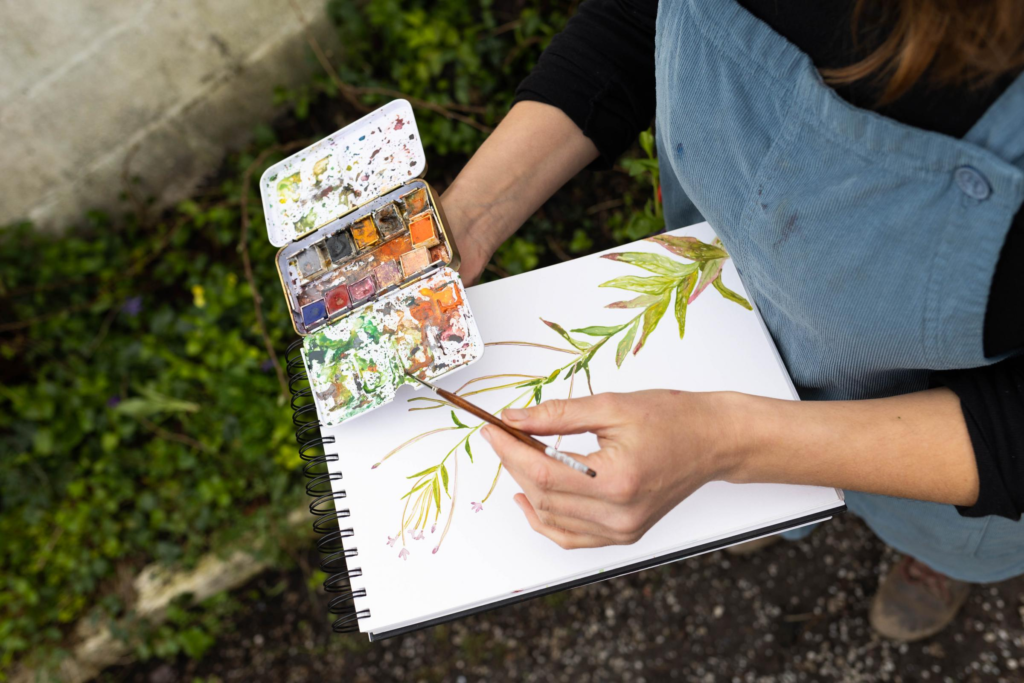


Seren Stacey’s 2023 exhibition Braenaru/Fallowing grew from 20 minutes of daily painting in a small garden left uncultivated during lockdown.
The exhibition at Dinefwr in Llandeilo presented 15 watercolours of plants that had appeared close to the artist’s home.
Learning the names of familiar plants
Stacey began by painting a different species each day. Although she was a Welsh speaker, she discovered that she did not know the Welsh names of many ordinary wildflowers.
Research revealed that some plants carried numerous names connected with folklore, local usage and physical characteristics.
The process changed the artist’s relationship with her subjects. Identification became a form of attention, and language added cultural history to botanical observation.
A small garden as a biodiversity study
The paintings supported the idea that meaningful contact with nature does not require a large rural property.
A garden, yard, verge, hedgerow or urban park can contain species overlooked when green space is kept closely controlled.
The exhibition opened during Plantlife’s No Mow May campaign, which encouraged people to allow lawns and other spaces to grow for the benefit of insects and plants.
Stacey connected that practice with hiraeth, a Welsh word associated with longing, belonging and attachment to place.
The watercolours did not simply catalogue botanical forms. They documented a process through which daily observation, language and reduced intervention created a stronger sense of connection with the land.
Braenaru/Fallowing showed how an exhibition can begin with a very limited physical area and still open into questions of biodiversity, cultural memory and the names through which people learn to recognise the living world around them.