

Vienna’s ALBERTINA has opened Her Story, a five-century survey that turns the museum’s own collection into evidence of women artists’ ambition, networks and repeated disappearance from the historical record.
Her Story: Women Artists of the ALBERTINA opened to the public in Vienna on 30 October 2026, after a press presentation and opening gathering the previous day. The exhibition brings together 250 works by 132 women, ranging from sixteenth-century engravers and publishers to modernists and pioneering feminist artists of the 1970s. It remains on view until 14 February 2027.
The opening was confirmed by the museum and by Austrian reporting published around the event, establishing the show as an activity that actually took place rather than an announcement alone.
A collection rewritten from within
The exhibition is not simply a roll call of familiar names. For the ALBERTINA’s 250th anniversary, its researchers turned back to a collection of roughly 1.2 million objects and asked how women had entered it, how they had been catalogued and why so many remained difficult to find. The review corrected incomplete or erroneous biographical data, returned to historic inventory books and identified 199 artists whom the museum had not previously known it held.
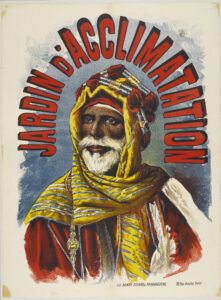
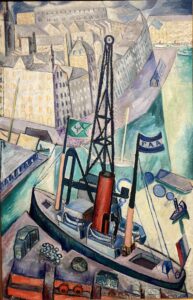
That archival work gives the display unusual weight. Maria Sibylla Merian, Angelica Kauffmann, Berthe Morisot, Käthe Kollwitz, Sonia Delaunay, Louise Bourgeois, Maria Lassnig and VALIE EXPORT appear alongside less familiar figures. Drawings and prints collected by Duke Albert of Saxe-Teschen and Archduchess Maria Christina sit within a longer account of authorship, professional independence and institutional memory.
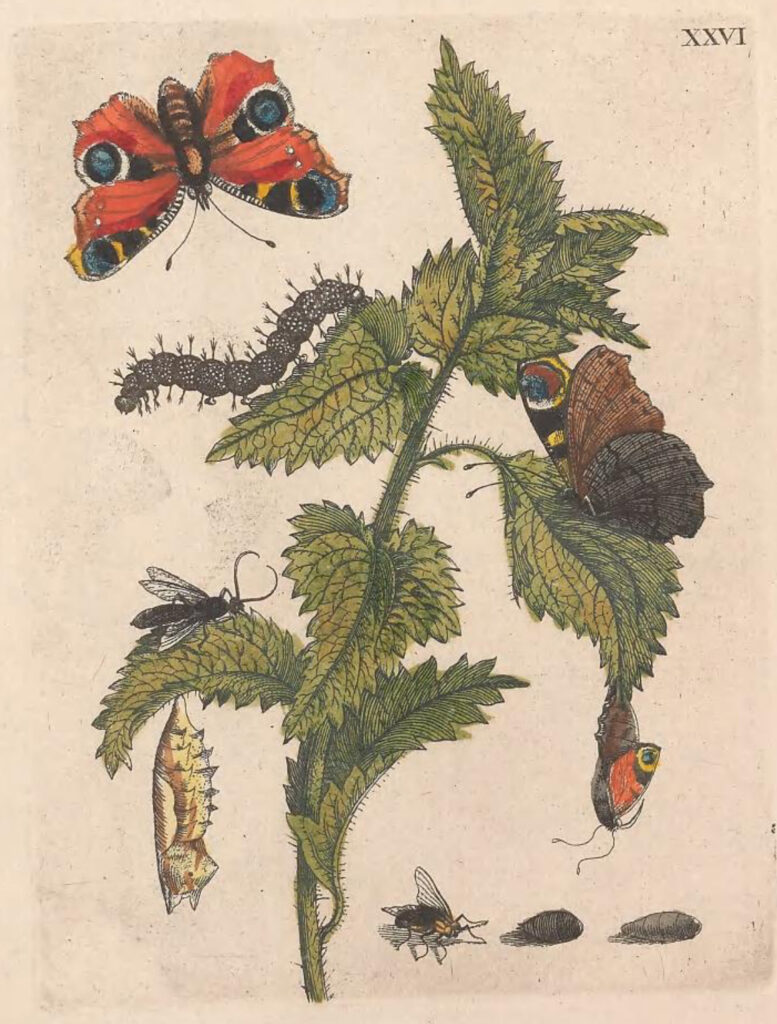
Merian is an especially vivid example. Her combinations of botanical observation and the study of insect metamorphosis joined artistic precision to scientific inquiry at a moment when women’s access to formal academies was restricted. Her presence helps the exhibition move beyond recovery as a symbolic gesture: it shows women producing knowledge as well as images.
A survey that treats absence as evidence
Rather than arrange the works as a straight triumphal march, the curators—Elisabeth Dutz, Katharina Hövelmann, Elsy Lahner and Eva Michel—combine chronology with themes and biographies. Visitors first encounter portraits and self-portraits, then questions about education, mobility, professional networks, exile and the durability of recognition. One section is devoted to displaced artists; another considers the autonomy women claimed even when later histories pushed them back into obscurity.
The result is both celebration and institutional self-audit. Gaps in digitisation and cataloguing become part of the story, not footnotes to it. By showing how attribution, documentation and collecting practices shape visibility, Her Story argues that the canon is maintained through everyday museum work—and can be changed by doing that work differently.
The ALBERTINA presents the exhibition as a starting point rather than a completed correction. That is its strongest claim: five centuries of work do not form an alternative art history, but a fuller one whose makers were present all along.
Image: Maria Sibylla Merian, stinging nettle with peacock butterfly, 1730. Public domain / Public Domain Mark, via Wikimedia Commons. This historical plate does not depict the exhibition or the exact Merian work on view.
