

HOLD FAST opened its 2026 contemporary arts festival in St. John’s, Newfoundland and Labrador, on Wednesday, 12 August, with a participatory workshop followed by readings, live music and an artists’ gathering at Theatre Hill.
The first day joined two strands that define the festival: making art with local communities and creating informal places for artists and audiences to meet. At Eastern Edge’s studio, participants worked with Chelsea Dab Hilke and Fred Schmidt-Arenales to make masks and props for a performance planned for the festival’s closing Art Crawl. Later, the launch moved to Theatre Hill Bar + Café, where musician Samuelle performed and literary magazine Riddle Fence presented readings.
Art built with a neighbourhood
The workshop prepared material for Something’s Happening in the Battery (and there’s nothing you can do about it), a participatory project by Hilke and Schmidt-Arenales. Framed as a farewell to St. John’s historic Battery neighbourhood, the work invites people to consider what a place means when development, memory and civic identity pull in different directions.
That approach makes participation more than an accompanying activity. The masks and props created on opening day will enter a public performance on 15 August, when the festival’s Art Crawl brings installations, performances and interactive projects into galleries and non-gallery spaces across the city. The first workshop therefore connected a small group’s labour to a larger public event still taking shape.
A platform for Atlantic contemporary art
Organised by the Eastern Edge Artist-Run Centre, HOLD FAST describes itself as a festival of contemporary performance, interdisciplinary practice and community engagement. Destination St. John’s identifies it as the city’s only festival devoted specifically to contemporary art and the longest-running event of its kind in Newfoundland and Labrador.
The 2026 featured artists extend that regional focus through different media. Shanelle St. Hilaire’s beadwork installation Waterfall considers sensory memory and relationships with water. Nora de Mariaffi’s wearable textile pieces require two people to inhabit them together. Melissa Tremblett, an Innu and English artist, combines installation and spoken word to challenge official timelines of Indigenous presence in Labrador.
These projects place questions of land, belonging and collective experience at the centre of the programme. Eastern Edge states that the festival’s priorities include queer, feminist and anti-racist perspectives, regional identity and Indigenous resistance to colonialism. Its location in Ktaqmkuk, the Mi’kmaq name for Newfoundland, is therefore part of the work’s context rather than a neutral backdrop.
An opening that established the method
A post-event update from the organisers confirmed that the workshop and launch party took place on 12 August. More importantly, the day established how this edition intends to operate: not as a sequence of finished objects presented at a distance, but as a temporary network of workshops, conversations and performances built with participants.
The festival continues through 15 August, culminating in the downtown Art Crawl. Its opening offered a compact statement of purpose: art as a shared process, rooted in a specific city and made visible through collective action.
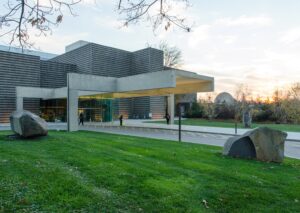
Featured image: the Majestic Theatre in St. John’s, which houses Theatre Hill Bar + Café, venue of the festival launch. This contextual photograph predates the event and does not show the workshop, launch party or participating artists. Photo by Martin Durocher, 2005, CC BY-SA 3.0, via Wikimedia Commons. No editorial modification other than automatic WordPress resizing.
.jpg)