

The Neue Galerie New York has reopened every gallery in its Fifth Avenue home with a single exhibition that doubles as an institutional self-portrait. Marking the museum’s 25th anniversary, the display brings its Austrian and German art and design back into view at a moment when the institution is preparing for another major transition.
Opened to the public on 12 November 2026, 25th Anniversary Exhibition: Masterworks from the Neue Galerie occupies the museum’s entire landmark building. Drawn mainly from the permanent collection and supplemented by recent acquisitions, it is the first full use of the galleries since restoration work closed them earlier this year.
A collection staged as an interior
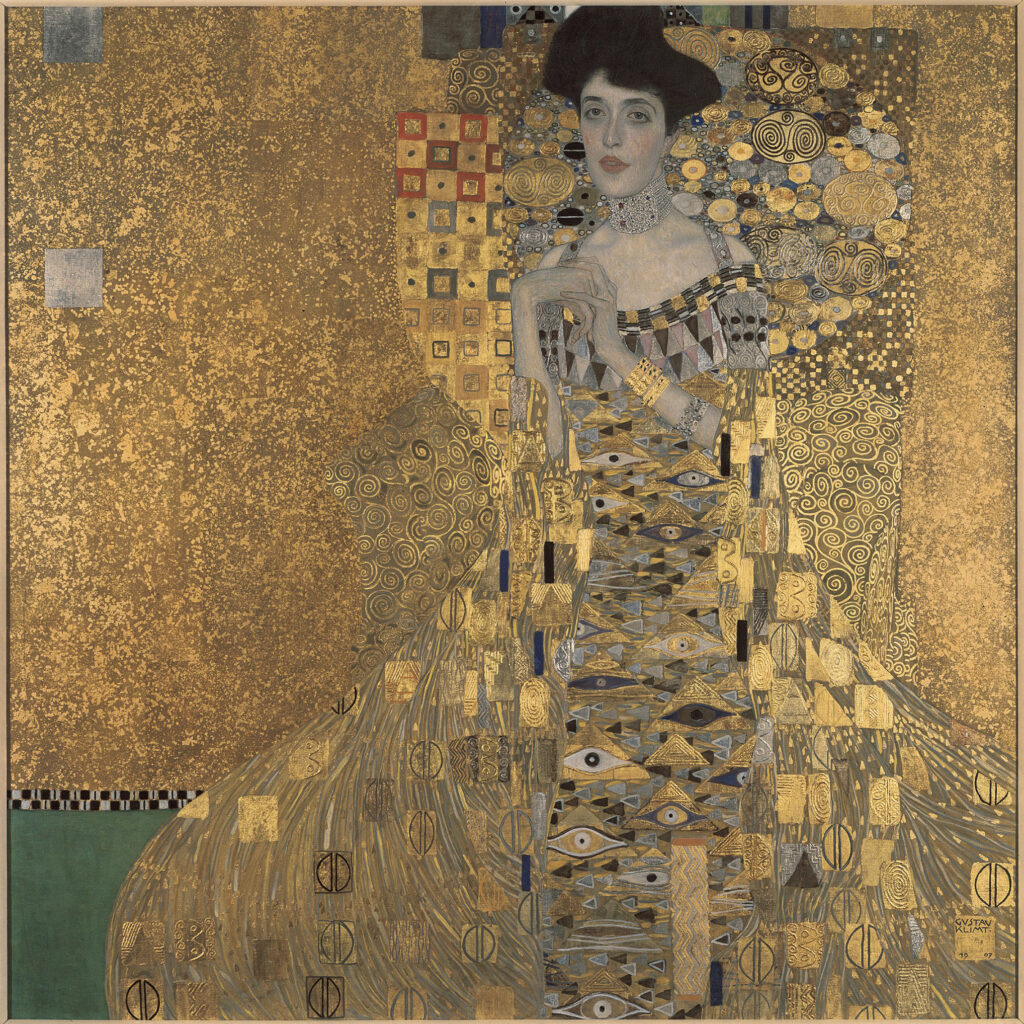
At the centre is Gustav Klimt’s Portrait of Adele Bloch-Bauer I (1907), the gold-and-silver portrait that has become inseparable from the museum’s public identity. Around it, works by Egon Schiele, Richard Gerstl and Oskar Kokoschka trace Viennese modernism, while Max Beckmann, Otto Dix and Ernst Ludwig Kirchner open onto German Expressionism. Furniture and objects by Josef Hoffmann, Koloman Moser, Marianne Brandt, Marcel Breuer and Ludwig Mies van der Rohe keep painting in conversation with architecture and design.
The arrangement makes the museum’s compact scale part of the argument. Rather than presenting a neutral survey, the Neue Galerie approaches early twentieth-century culture as a Gesamtkunstwerk—a total work of art in which pictures, interiors, furniture and graphic design shape one another. The anniversary hang therefore asks visitors to read the townhouse itself as part of the collection, not merely as its container.
Klimt’s portrait also carries a history that resists simple celebration. Commissioned by Ferdinand Bloch-Bauer, it was seized after the Nazi annexation of Austria and entered the Belvedere collection. Following a prolonged restitution case, the painting was returned to the family’s heirs in 2006 and acquired for the Neue Galerie. Its prominence connects the museum’s aesthetic ambitions to the unresolved histories of dispossession, recovery and private collecting that accompany much European modernism.
An anniversary on the edge of change
The reopening follows work intended to protect the historic building and improve its environmental performance and visitor experience. The café, shop and book store resumed activity in October, but the galleries themselves remained closed until this exhibition. That staged return gives the anniversary greater weight: the collection is not simply being rehung, but reintroduced after a physical reset.
The exhibition also arrives ahead of the Neue Galerie’s planned 2028 merger with the Metropolitan Museum of Art. The Fifth Avenue townhouse is expected to retain its distinctive identity while becoming the Met Ronald S. Lauder Neue Galerie, and further gifts of Austrian and German modern art are planned. Seen in that context, the current display is both retrospective and provisional: it defines what the museum has been before its next institutional chapter begins.
By filling the entire house with the collection that formed it, the Neue Galerie turns an anniversary into a test of continuity. The question is not whether these familiar masterpieces can still command attention, but how their beauty, provenance and museum setting will be carried into a different future.
Image credit: Gustav Klimt, Portrait of Adele Bloch-Bauer I, 1907, Neue Galerie New York. Public-domain faithful reproduction via Wikimedia Commons (PDM 1.0). The image shows the work, not the museum’s 2026 reopening.