
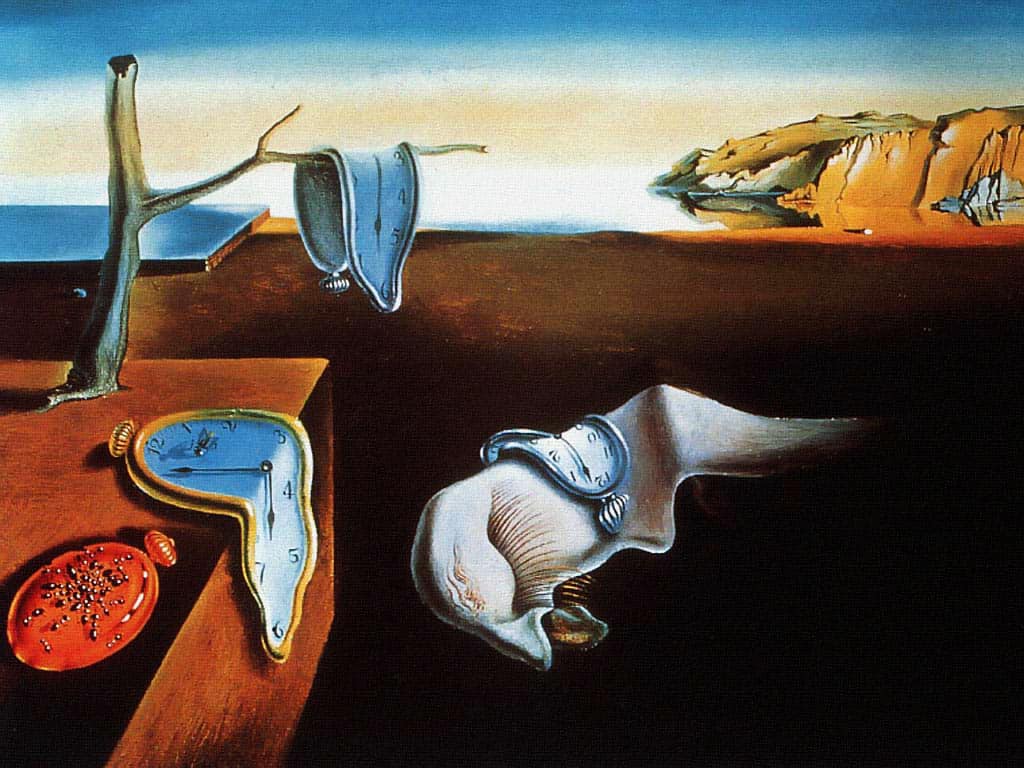

The 2022 exhibition Dalí Cybernetic used projection, virtual reality and interactive digital space to reinterpret more than 200 works by Salvador Dalí.
The project opened in Barcelona on 20 September and was planned as the starting point for an international tour extending to more than 20 cities over approximately four years.
Entering a constructed Dalí universe
Visitors used virtual-reality headsets to create avatars and move through digital environments based on the artist’s imagery. The experience was organised around four spaces identified as the sea, the sky, the void and the desert.
During a 15-minute sequence, the audience could move inside animated interpretations of Dalí’s work rather than observing paintings from a fixed position. A reconstructed version of the artist’s voice guided visitors through parts of the journey.
This format sought to create interaction with Dalí’s visual world without claiming that the digital environment replaced the original works. The exhibition treated scale, motion and spatial immersion as new interpretive tools.
A production designed to travel
Dalí Cybernetic was co-produced by Exhibition Hub and Layers of Reality, a company specialising in immersive audiovisual content. The Digital Arts Centre IDEAL in Barcelona had worked for nearly two years on the project.
Its planned touring structure reflected a broader development in exhibition production. Digital files, projections and virtual spaces could be installed in different cities without transporting a conventional group of original paintings.
The approach also raised curatorial questions about how historical art is transformed through technology. Dalí’s interest in dream states, unstable space and altered perception made his work particularly suited to immersive treatment, but the digital spectacle remained an interpretation created by contemporary producers.
The exhibition’s importance lay in this tension. It expanded access and offered a new spatial experience while demonstrating how strongly technology can reshape the way an artist’s work is framed and remembered.