
Chicago Exhibition Week 2026 began on Monday, September 14, turning a citywide network of galleries, museums and artist-run spaces into a shared itinerary. Instead of concentrating attention in one convention hall, the fourth edition asks visitors to move across Chicago, treating the act of travelling between venues as part of the encounter with art.
The week runs through September 20 and brings together 75 participating spaces, including 44 galleries, according to the organiser’s current programme. Produced by the cultural agency Gertie, the event has expanded from a three-day weekend into a full week, giving exhibitions, conversations and performances more room to coexist.
Four opening-night routes through Chicago
Monday’s programme established that distributed rhythm through four simultaneous and successive gatherings. At the Arts Club of Chicago, director Janine Mileaf and artist Ann Toebbe led a discussion of Mernet Larsen: Situational Awareness. VSG Contemporary paired its exhibition programme with a chess night, while the Graham Foundation hosted architect Koray Duman for a conversation about exhibition architecture.
The evening continued at Constellation with the launch of a book devoted to curator Hamza Walker’s years at the Renaissance Society. Together, the events linked painting, social play, architectural thinking and publishing without forcing them into a single curatorial theme. Their common frame was the city itself and the institutions that sustain its visual culture.
Rather than treating Monday as a preview for a more important weekend, the schedule gave its first night a distinct identity. The four programmes also demonstrated how the event’s scale is built from different kinds of participation: close looking in an exhibition, informal exchange around a game, professional debate and reflection on curatorial history.
A festival built around movement
The format is deliberately navigational. The official map and passport divide the programme into zones and invite visitors to collect stickers at four venues in at least two areas. A completed passport grants free admission to participating cultural institutions on the final day, making geographic movement a practical incentive rather than a slogan.
That structure also responds to the difficulty of representing Chicago’s art ecology as a single centre. Commercial galleries appear beside nonprofit organisations, university museums and temporary initiatives. Axios Chicago reported that the longer format was designed to improve access and allow more audiences to participate, while a WBEZ and Chicago Sun-Times guide published on opening day underscored the breadth of the local gallery landscape.
The opening night offered no single spectacle to summarise the week. Its significance lay instead in coordination: four programmes, four kinds of space and a public encouraged to make connections between them. As the calendar expands toward openings, workshops and performances later in the week, Chicago Exhibition Week proposes that an art scene becomes legible not only through what is shown, but through the routes audiences take to see it.
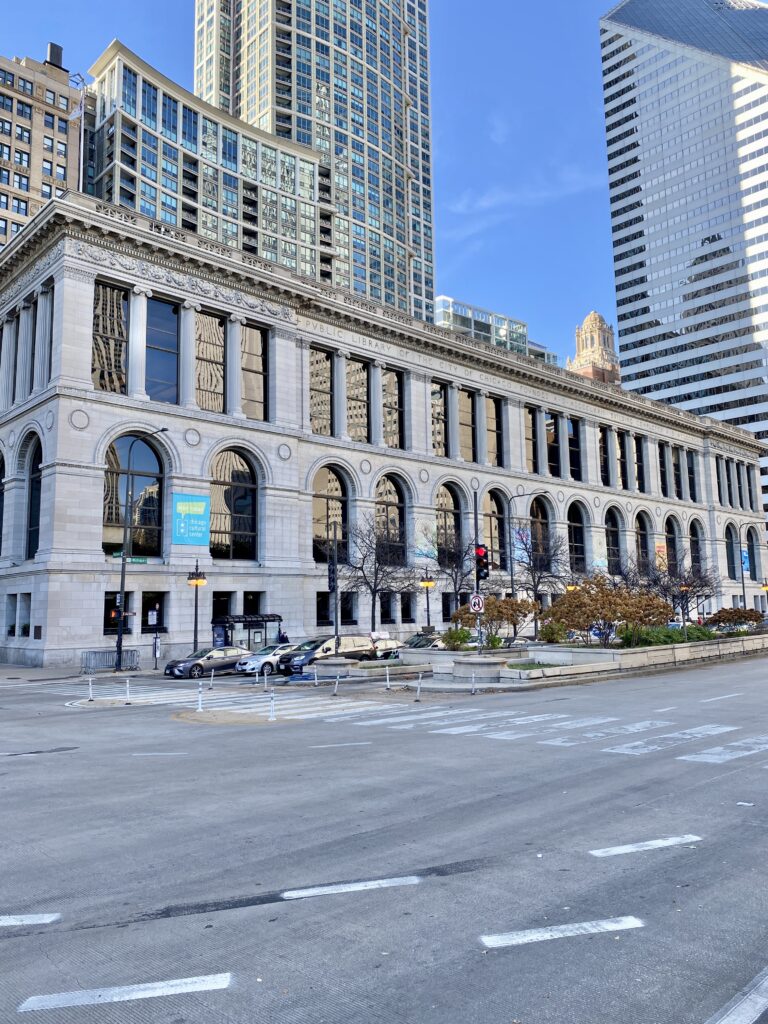
Context image: Chicago Cultural Center, a participating venue in Chicago Exhibition Week 2026. Photograph by Warren LeMay (w_lemay), 2022, licensed under CC BY-SA 2.0, via Wikimedia Commons. The photograph does not depict the 2026 event.