

On 4 November, Santiago de Compostela’s Museo Centro Gaiás opened Ser—Noutras, an exhibition that treats a collection not as a fixed canon but as material for new encounters. More than thirty works of Galician art from the Museo Reina Sofía are placed in conversation with work by contemporary Galician artists, including fifteen commissions made for the project. The result is a multigenerational field of roughly fifty works by forty-five artists.
The exhibition is organised around eighteen dialogues. Historical figures such as Maruja Mallo, Julia Minguillón, Arturo Souto and photographer Virxilio Viéitez meet artists working across installation, performance, film, sound and sculpture. Rather than asking contemporary practice to illustrate the past, curators Verónica Santos Farto and Chus Martínez Domínguez allow affinities, frictions and disagreements to remain visible.
A collection staged as a living exchange
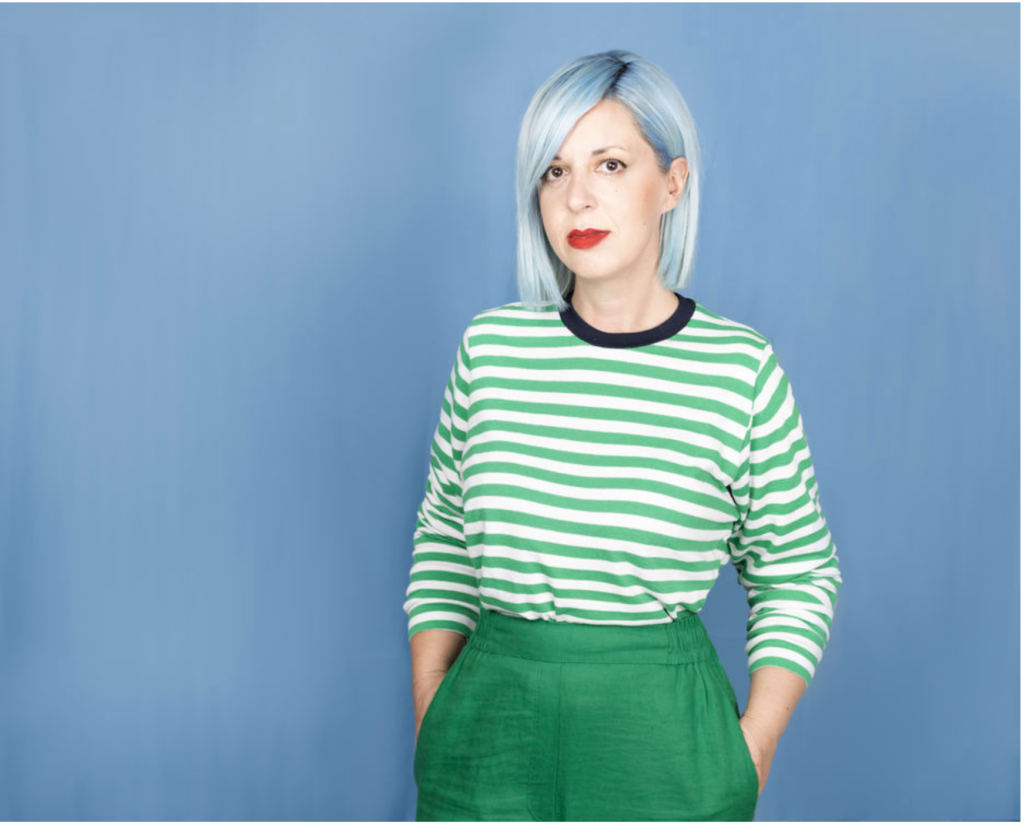
Marta Pazos gives that proposition an architectural form. Her new installation Maruja, developed in response to Mallo’s surrealist imagery, turns the gallery into what the organisers call a “visual theatre.” Its deep theatrical colour and spatial scale provide a stage for the exhibition’s many voices, making display itself part of the argument.
The opening also activated works that cannot be reduced to objects. In Llamar, multiplicar, Rodríguez-Méndez invited pairs of parents to strike yellow sheets of paper with prescription glasses, extending a dialogue with Tino Grandío’s Campesino afila guadaña. A live recital by poet Yolanda Castaño, heard alongside the recorded voice of Loreto Martínez Troncoso, added another exchange across presence and absence.
Post-opening reports from EFE and Europa Press described visitors moving through the finished galleries and documented the inaugural performances, confirming that the event took place as announced. They also reveal a project conceived less as a survey than as an active proposition: a national collection returning to Galicia and being changed by the encounter.
Galician art viewed from Galicia
That emphasis on process is central to Ser—Noutras. Its artists move between memory, identity, territory, conflict, the body, sexuality, care and feminism. The exhibition therefore does more than bring Galician holdings from a national museum to Galicia. It tests how a collection can be re-read from its cultural context and expanded by artists who are shaping that context now.
The scale of the project is significant, but so is its location. At the Peter Eisenman-designed Cidade da Cultura, a monumental complex often discussed through architecture, the show turns attention toward relationships: between Madrid and Santiago, heritage and experiment, and established names and emerging practices. The official opening, attended by representatives of the Xunta de Galicia and the Reina Sofía, was followed by public access the same afternoon.
Ser—Noutras. Dialogues with Galician Art from the Museo Reina Sofía Collection is free to visit at the Museo Centro Gaiás from Tuesday to Sunday, 10 a.m. to 8 p.m., through 28 March 2027. Its premise is simple but productive: what remains from the past can acquire new lives when artists are allowed to look at it from elsewhere.
Featured image: Marta Pazos, Galician artist and scenographer who designed the central installation for Ser—Noutras. Photograph by EmilioManzano, 2024, via Wikimedia Commons, licensed under CC BY 4.0. No editorial modification. This is a portrait of Pazos, not a photograph of the exhibition or its 2026 opening.
