
The 2022 exhibition INDIGO! brought textile, paper, ceramic and everyday objects together through the distinctive blue produced by indigo dye.
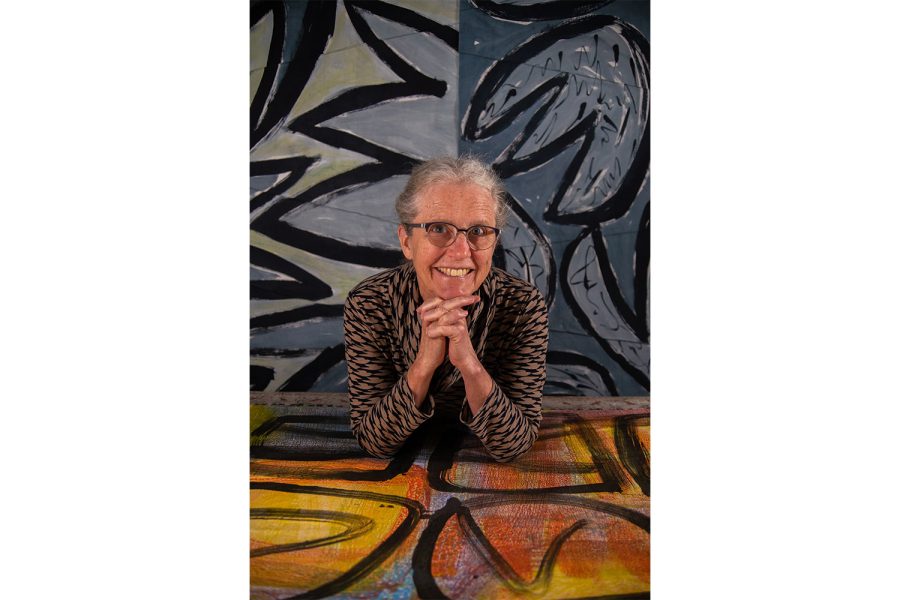
Curated by Iowa City artist Astrid Bennett at Public Space One, the exhibition included her own work alongside pieces by friends, professional artists and University of Iowa MFA students.
A dye shaped by folding, stitching and air
Indigo behaves differently from many dyes. Where cloth, paper or yarn is folded, tied, stitched or twisted, resistance prevents colour from reaching parts of the material.
The liquid appears green in the vat and turns blue through oxidation. Repeated dyeing can create deeper tones, while other processes introduced sea green, brown and pale pink.
Bennett combined dyed fabric with drawing in India ink, joining her interest in textile, painting and natural rhythm. Professional weaver Jan Friedman experimented with stitching that controlled how the dye spread, while other contributors worked with paper, ceramics, chopsticks and Japanese-inspired hanging forms.
Beauty carrying a difficult history
The exhibition did not treat indigo only as a magical material. Bennett drew attention to its colonial history and the forced labour of enslaved people whose knowledge supported indigo production.
This context complicated the pleasure of the colour and required viewers to consider how materials carry economic and human histories.
INDIGO! therefore combined technical discovery with historical responsibility. The works celebrated uncertainty, since dyeing did not always produce predictable results, while the exhibition insisted that appreciation of the material should include the conditions through which it had circulated globally.