
Charisse Pearlina Weston’s 2022 exhibition at Queens Museum used suspended glass, altered photographs and architectural obstruction to examine Black intimacy, resistance and the politics of movement.
Titled of [a] tomorrow: lighter than air, stronger than whiskey, cheaper than dust, the exhibition occupied two rooms within a museum surrounded by remnants of the 1964 World’s Fair.
A protest that planned to stop the fair
Weston drew on the history of a civil-rights action proposed in response to the World’s Fair. Activists planned to stall vehicles on surrounding roads, using delay to represent the ways anti-Black structures restricted movement and access.
The plan generated intense opposition and did not proceed, but it became central to Weston’s interest in obstruction as a tactic of resistance.
The history also connected with the influence of urban planner Robert Moses, whose infrastructure and park decisions shaped movement across New York and have been criticised for their racial effects.
Glass changing the visitor’s route
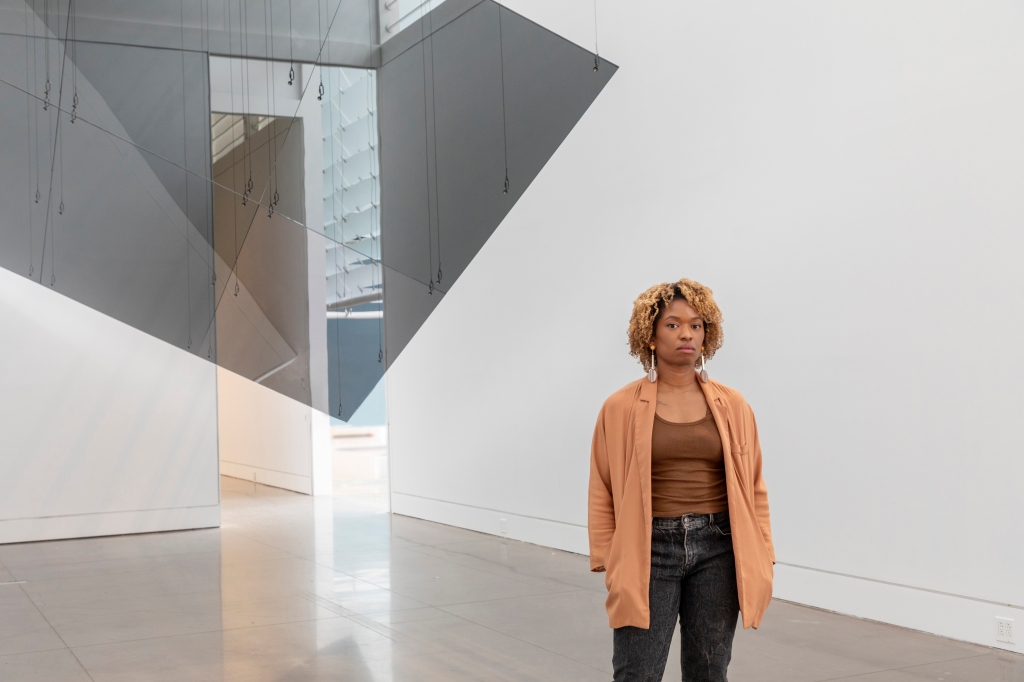
A large glass installation hung across the entrance to the second gallery, physically interrupting the direct path through the exhibition. Its transparent supports created the appearance of risk while making the structure holding the work difficult to see.
Smaller glass sculptures incorporated archival photographs of the proposed 1964 protest, the Watts uprising and Black Lives Matter demonstrations in 2020.
Weston distorted and skewed the images to resist the easy consumption of violence against Black bodies. Photography became embedded within sculpture rather than presented as straightforward documentation.
The exhibition extended the artist’s practice across installation, photography, video, painting, poetry and written language.
By modifying the museum’s architecture, Weston made delay something visitors experienced physically. The exhibition connected historical protest with the protocols that continue to determine who can enter, move and remain within public space.