
On Saturday, October 17, The Baker Museum opened The Surrealist International: Fifty Years of Dreams in Naples, Florida. Drawn from Tate’s collection, the exhibition follows Surrealism beyond its familiar Parisian origin story and across five decades of painting, photography, sculpture and objects. Its argument is less that Surrealism became one worldwide style than that artists in different places used it as a flexible method for unsettling reality.
A movement without one centre
The exhibition brings canonical figures such as Salvador Dalí, René Magritte, Joan Miró, Dora Maar, Man Ray and Dorothea Tanning into the same frame as artists whose work complicates the usual map. Kati Horna, Malangatana Ngwenya, Osamu Shiihara and Sri Lankan photographer Lionel Wendt appear not as footnotes, but as evidence that Surrealism travelled through distinct political, cultural and visual contexts.
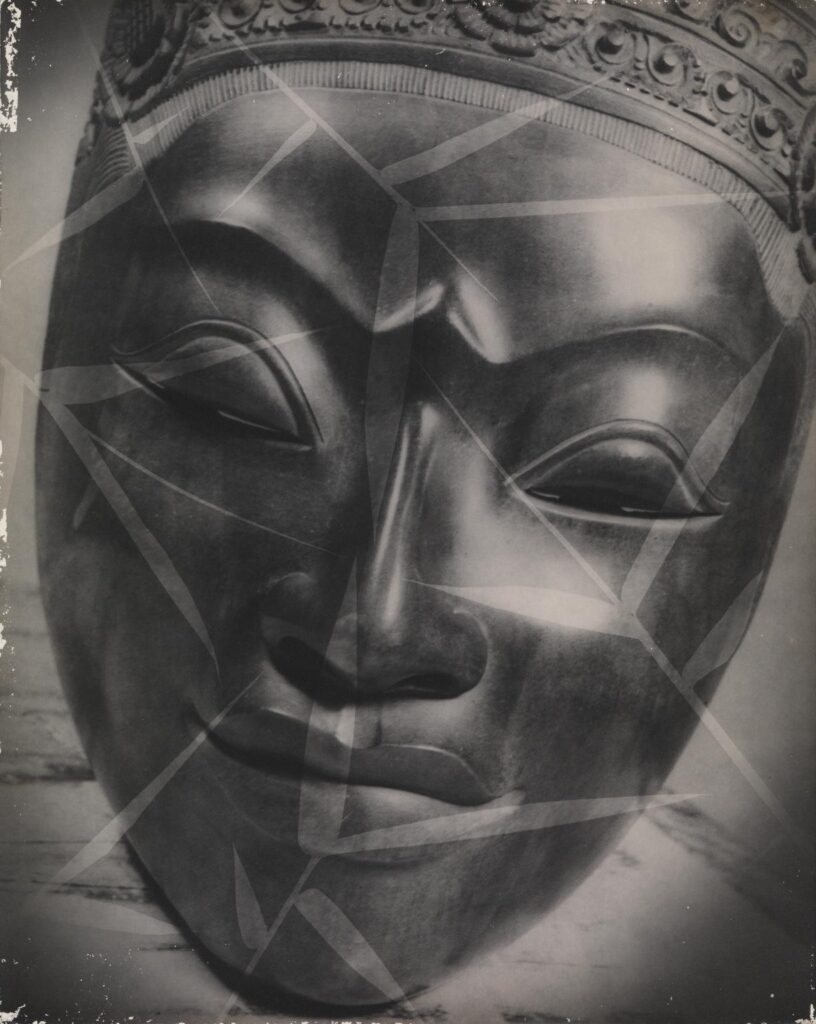
That expanded field gives the show its tension. The movement’s dream logic could offer freedom from convention, yet it was also shaped by colonial histories, exile and local struggles. Wendt’s photographs, for example, combine modernist experimentation with the bodies, landscapes and performance traditions of Ceylon, now Sri Lanka. His layered images demonstrate how an artist could absorb Surrealism without merely repeating European formulas.
A Southwest Florida arts preview highlighted that breadth before the opening, naming both celebrated and lesser-known participants. The Baker Museum now confirms that the exhibition is on view through February 14, 2027, on its third floor.
Dreams as a shared method
Rather than arranging the material as a simple chronology, the exhibition is organized around recurring Surrealist concerns: dreams, the mysterious energies of nature, political freedom, unexpected objects and the release of repressed desires. This thematic structure allows distant practices to meet without pretending their circumstances were identical.
The result is a history built through echoes. A photograph can share a psychic charge with a sculpture; an ordinary object can become uncanny beside a painted fantasy. Those relationships show why Surrealism outlived its manifestos. Its most durable legacy may be the permission it gave artists to treat irrationality, chance and desire as serious tools for understanding modern life.
Wendt’s [Untitled] Mask overlaid with a pattern of bamboo leaves, made around 1933–38, captures that permission in a single image. A face appears through a veil of foliage, suspended between portrait, disguise and dream. The photograph belongs to Tate, and Wendt is included in the Naples exhibition; the available documentation does not establish that this particular print is on display.

By placing familiar icons beside such less familiar practices, The Surrealist International turns a movement often reduced to a handful of European masters into a network of experiments. Its arrival in Naples asks visitors to see Surrealism not as a closed historical episode, but as a border-crossing way of remaking the visible world.
Image: Lionel Wendt, [Untitled] Mask overlaid with a pattern of bamboo leaves, c. 1933–38. Tate, via Wikimedia Commons. Licensed under CC BY 3.0; no modifications. Contextual image by an artist included in the exhibition; the documentation does not confirm that this specific print is on display.