

On October 22, the Metropolitan Museum of Art opened Designing the Gilded Age: Drawings from the Studios of Louis C. Tiffany, turning attention away from finished lamps and stained-glass windows and toward the fragile sheets that preceded them. Nearly 120 watercolors and working studies, joined by selected loans, reveal how color, structure and atmosphere were negotiated before a commission entered glass, mosaic or metal.
The exhibition arrives with an unusually specific claim: these drawings are not secondary records. They are the place where rooms, windows and objects first became possible. Some preserve interiors that were later altered or destroyed; others document projects that never left the page. Seen together, they make the Tiffany enterprise less a collection of luxury objects than a workshop in which design moved through many hands.
Behind a famous name
Louis Comfort Tiffany remains the name attached to the studio, but the exhibition complicates that singular authorship. The Met highlights women and émigré designers including Agnes Northrop, Clara Driscoll, Julia Munson, Frederick Wilson and Jacob Holzer. Their work shaped domestic interiors, churches, civic spaces and commercial commissions from the 1890s through the 1920s.
That collaborative history matters because the Gilded Age often presented wealth as individual taste made visible. The drawings expose the labor beneath that illusion. A watercolor could function as proposal, technical guide and persuasive image at once. Its borders, color tests and revisions show that the celebrated glow of Tiffany glass was planned, argued over and translated long before daylight reached it.
From paper to glass
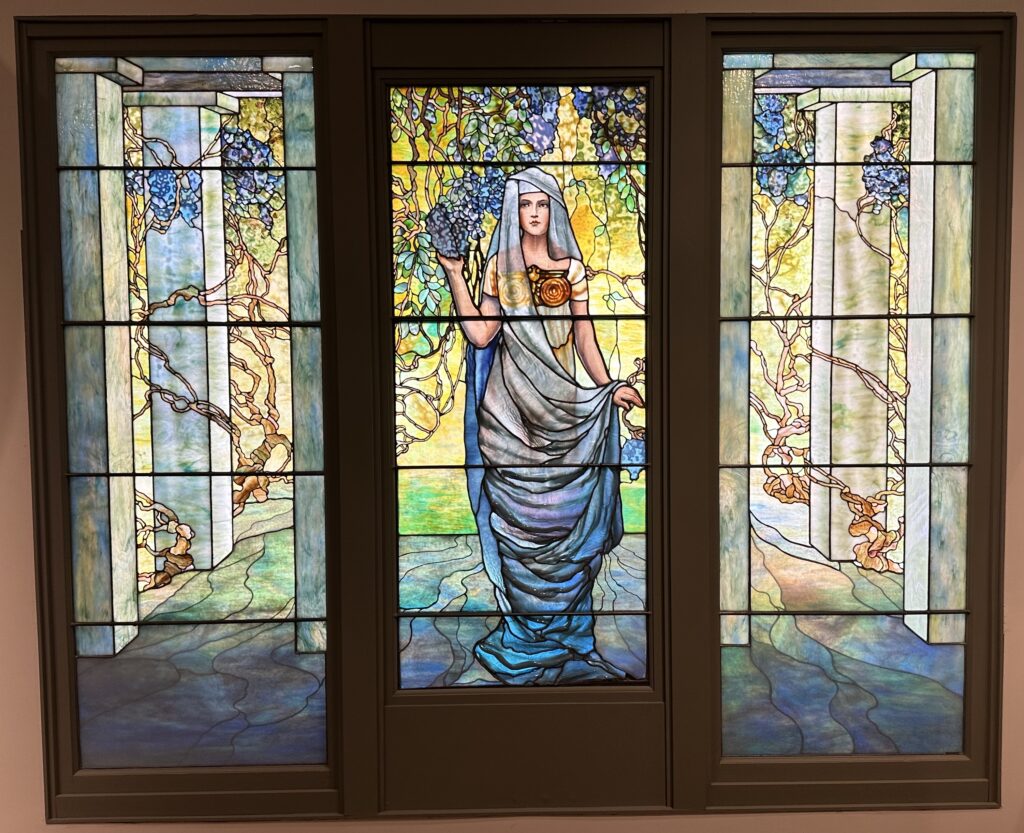
One of the exhibition’s central reunions makes that translation tangible. The Chrysler Museum of Art has lent Woman in a Pergola with Wisteria, a monumental window made in 1911, while its original wisteria transoms—recently discovered in an Arizona home—return above it for the first time in at least half a century. A related design drawing places the finished window beside the studio’s thinking.
Recent research identifies the woman as the American opera singer Lillian Nordica, portrayed in Verdi’s Aida. The commission came from Captain Joseph Raphael De Lamar, who reportedly proposed marriage to her twice. She refused, but the window transformed that private attachment into a permanent architecture of flowers, costume and colored light.
The conservation campaign is part of the argument rather than backstage maintenance. The Met has spent decades stabilizing and studying these fragile sheets, and the gallery’s digital material follows discoveries made during that work. Restored color and newly legible details make collaboration easier to trace, particularly where a famous studio name once obscured an individual designer.
The exhibition is strongest when such stories pull against the smooth surface of the Tiffany brand. It asks viewers to look past spectacle and follow a chain of decisions: a contour drawn, a color chosen, a collaborator credited, a lost room reconstructed through paper. After decades of conservation, the drawings now hold the center rather than the margin. They show that Gilded Age splendor was not simply purchased; it was collectively imagined, revised and made.
Image: Woman in a Pergola with Wisteria, Tiffany Studios, c. 1910–14, photographed at the Chrysler Museum of Art by Toohool. CC BY-SA 4.0 via Wikimedia Commons. The window is on loan to the Met exhibition; this is an artwork view, not an installation photograph.
