
The GAIA Hypothesis, Chapter Two: Palm Trees Also Die 2.0 at The Elemental in Palm Springs brought together 22 artists around the cultural and ecological histories of the palm.
The expanded exhibition included 27 works across sculpture, digital media, painting, photography, stoneware and installation.
From sacred landscape to modern icon
The exhibition was dedicated to the Cahuilla Nation and situated the palm within a history extending beyond its familiar image as a symbol of California leisure.
Native Washingtonia filifera palms have long been part of the desert environment and were used by Cahuilla and Paiute communities for construction, basketry and other practical purposes.
Other species, including Mexican fan palms, were introduced in large numbers to Southern California during the twentieth century and became part of the region’s manufactured visual identity.
Artists working with the palm as material and subject
Participating artists included Ed Ruscha, Chris Sanchez, Zoe Crosher, Rachid Bouhamidi and Francesca Gabbiani.
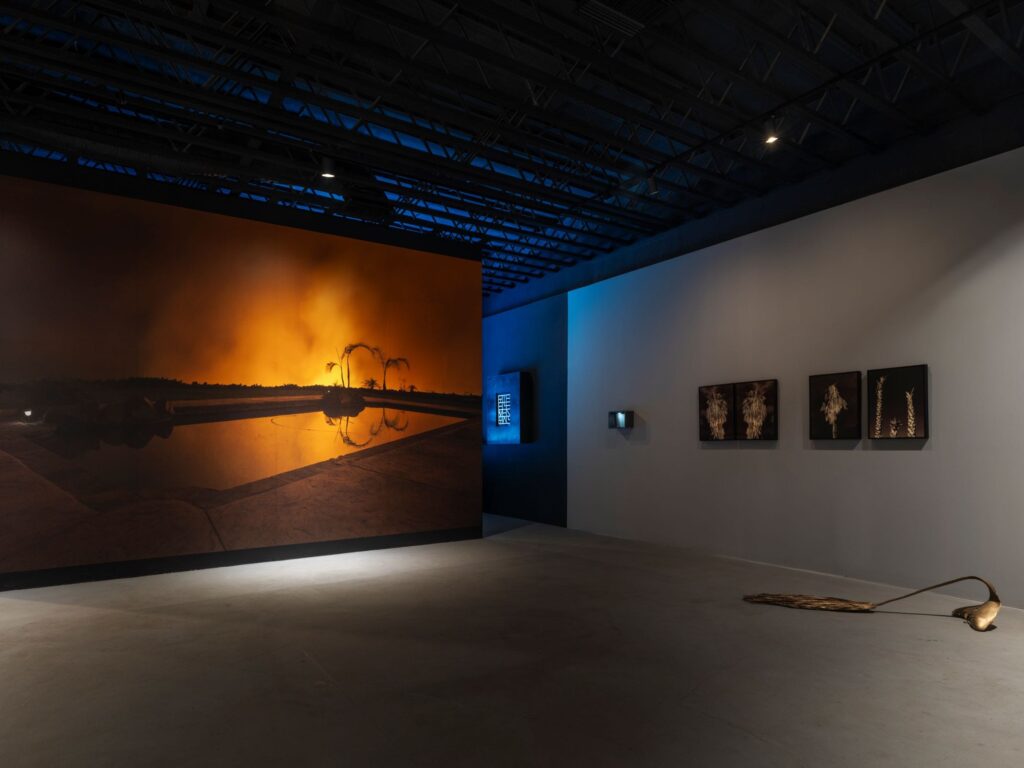
Sara Favriau created small sculptures from plant fibres, minerals and human debris, as well as a collaborative work using a palm trunk, palm frond and rope made from palm fibres.
Jeff Frost’s photograph Carlsbad Mansion Pool, made during the 2014 Poinsettia Fire, connected the exhibition’s ecological concerns with environmental disaster.
Palm Trees Also Die 2.0 treated the palm as a living organism, historical resource and cultural image whose meaning changes alongside the landscape itself.