
Opening in St. Louis on 9 September, a posthumous survey follows Juanita McNeely from her early figure studies to late ceramics, placing a fiercely bodily feminist practice back in the city that first shaped it.
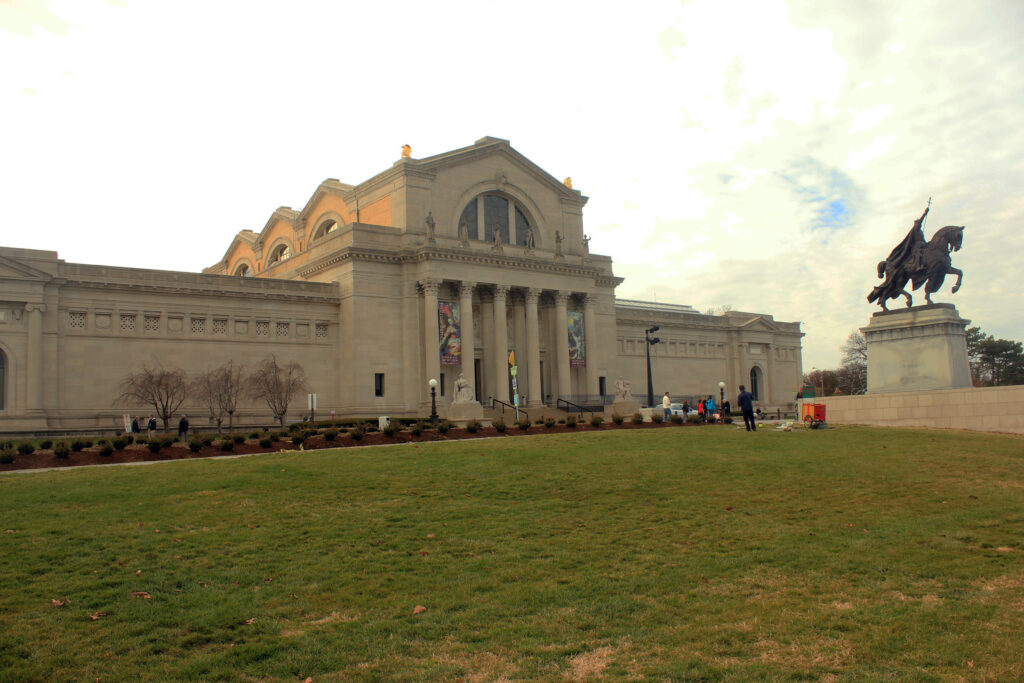
At the Saint Louis Art Museum, Juanita McNeely brings together paintings, drawings and ceramics made between 1959 and 2019. On view through 28 February 2027, the free exhibition occupies galleries 210 and 211 and is the first solo presentation of the artist’s work in her hometown. That homecoming matters because McNeely, who died in 2023, spent six decades making bodies carry experiences that polite culture often pushed out of sight.
A body that refuses containment
Born in St. Louis in 1936, McNeely studied at Washington University in the late 1950s. She also encountered Max Beckmann’s work at the museum, an influence the curators place beside Paul Gauguin and Henri Matisse. Yet her painting turned those art-historical encounters into something insistently autobiographical. Bodies twist, split and press against their frames; pleasure and pain occupy the same pictorial space.
McNeely drew on experiences of cancer, abortion and a spinal injury, without reducing them to confession. In her hands, vulnerability becomes a formal problem and a political argument. The work asks who is permitted to represent a female body, which bodily realities enter museums, and whether beauty can survive anger without neutralising it.
That question sharpened in 1969 with Is It Real? Yes, It Is!, a monumental account of abortion later acquired by the Whitney Museum of American Art in 2022. As Brian Hearn notes in KC Studio, the acquisition marked a belated institutional recognition of a practice that had long circulated through feminist collectives and artist-run networks.
A homecoming across two museums
The Saint Louis survey, co-curated by Raphael Fonseca and Simon Kelly, is part of a wider collaboration with Counterpublic and the Contemporary Art Museum St. Louis. On 10 September, CAM opens Triskaidekaptych, centred on McNeely’s 13-panel cycle of 1970 to 1975. Together, the exhibitions connect the scale of her career with the intensity of a single landmark work.
The timing also changes the meaning of “homecoming.” This is not a nostalgic return organised during the artist’s lifetime, but a posthumous correction in the city where her visual education began. The museum that once supplied McNeely with examples of modern painting now has to absorb what she did with them: a language in which the body is unstable, resistant and impossible to tidy away.
McNeely’s first hometown solo exhibition therefore reads less like a rediscovery than a recalibration. It places a sustained feminist practice inside the institution and lets six decades of work argue that private pain, when given form, is never only private. Its urgency comes from how directly that argument continues to speak to the present.
Featured image: The Saint Louis Art Museum in Forest Park, photographed in 2012. This contextual image shows the institution, not the Juanita McNeely exhibition. Photo: Archbob, CC0 1.0, via Wikimedia Commons.
