

The CAM Raleigh building sale turns a 15-year museum home into a test of whether a contemporary arts institution can sustain its public mission beyond one costly building.
On 3 August 2026, CAM Raleigh announced that it would sell its building at 409 West Martin Street in Raleigh, North Carolina. The contemporary art museum, which has paused on-site exhibitions and programming, said the decision was intended to give the organisation a more flexible and financially sustainable basis for its next chapter.
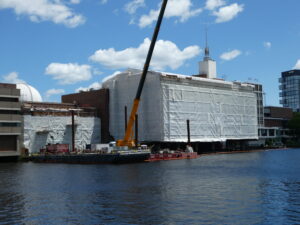
The CAM Raleigh building sale concerns the museum’s home since 2011, a prominent presence in the city’s Warehouse District. According to the institution, the cost of maintaining a permanent physical venue had grown faster than the support available to sustain it. The building is now marketed as a 20,683-square-foot property on a 0.57-acre site.
A museum separating mission from property
CAM Raleigh does not describe the sale as the end of the organisation. Its statement presents the move as an effort to stop one building from defining, and limiting, its cultural mission. The museum is exploring a future that could rely more on partnerships, temporary venues and programming distributed across the city, although no timetable or detailed operating model has yet been announced.
That distinction matters. The institution had already stopped mounting exhibitions at West Martin Street more than a year before the sale announcement. Selling the property therefore formalises a transition that was already under way, while also removing the venue around which CAM’s public identity had been built for 15 years.
The decision has a wider significance for the visual arts sector. Small and mid-sized museums often depend on a fragile combination of donations, memberships, grants and event income. A distinctive building can attract audiences and confer visibility, but its staffing, maintenance, insurance and energy costs can also absorb resources that might otherwise support artists and programmes.
What Raleigh could lose, and what CAM could gain
For Raleigh, the sale places a question mark over a recognised cultural address in a rapidly changing downtown district. CAM’s former home was more than an exhibition container. It offered a stable point of contact for contemporary art, public events and local creative communities. The property listing does not determine what will happen to the building next.
For the museum, however, leaving the site could create room to rethink scale and access. A lighter structure might allow CAM to commission projects in different neighbourhoods, collaborate with existing institutions or return to exhibitions without carrying the same fixed costs. Those possibilities remain provisional, and the sale itself does not guarantee that a new model will succeed.
The CAM Raleigh building sale is therefore both a financial decision and a cultural experiment. It asks whether an institution can retain trust, continuity and artistic ambition when it gives up the architecture most closely associated with its name.
Official statement: CAM Raleigh.