
Groningen’s performing-arts festival closed with a redesigned public space and higher attendance. Its balance of free encounters and international theatre offers a useful way to think about access to the arts.
Noorderzon Festival of Performing Arts & Society ended its 36th edition in Groningen, the Netherlands, on 30 August 2026, after eleven days of performances across the Noorderplantsoen and city venues. The organiser’s closing report recorded more than 150,000 visitors and a 7% increase in ticket sales despite wet weather. These are festival-reported figures, rather than an independently audited count.
The change was not simply numerical. Local broadcaster OOG reported that the large, free Apollo music stage had been dropped, partly because of budget cuts. Smaller performances from several disciplines were instead distributed through the park, allowing people to encounter music, theatre and performance without booking in advance. That shift changed the relationship between passing through the grounds and deliberately becoming an audience.
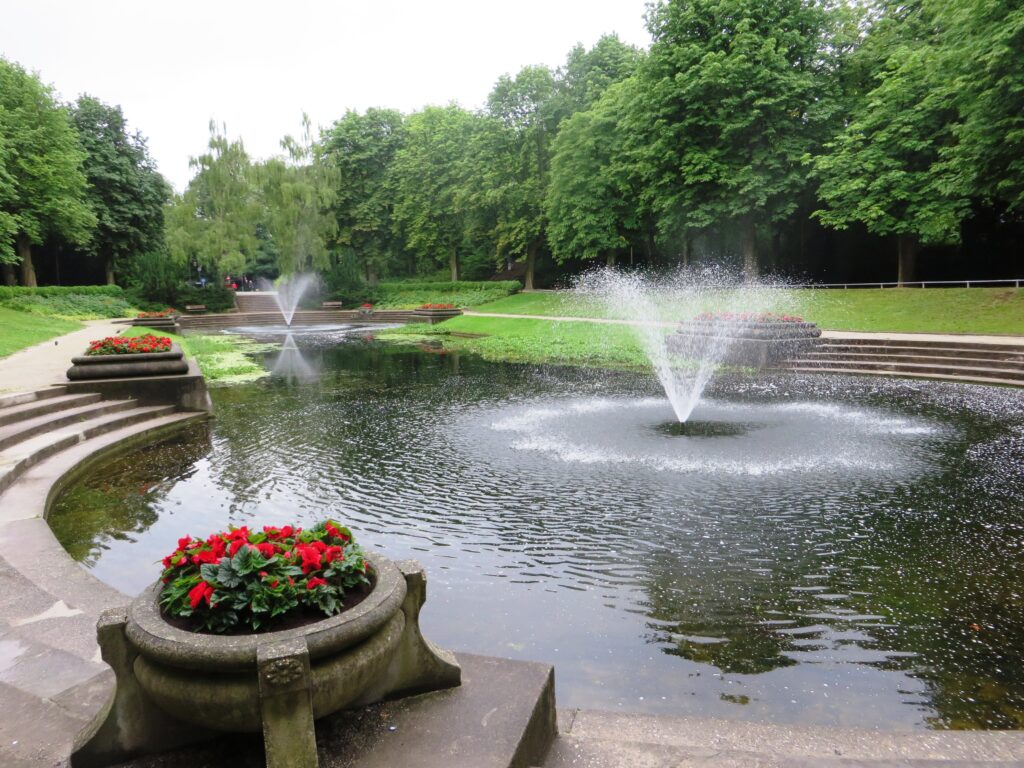
Around the pond, the new De Kraken meeting place incorporated a stage on the water. Callisto remained a focus for free live music, while De Dans and roaming acts added other points of activity. Containers were gathered along the Leliesingel, and the children’s programme occupied a redesigned play area. The park functioned as a network of smaller destinations rather than a backdrop to one dominant stage.
The international programme provided a different kind of encounter. It included Dead Centre’s Deaf Republic, based on Ilya Kaminsky’s 2019 poetry collection, which imagines a town responding to military violence through collective deafness. In her Theaterkrant review of the 22 August performance, Wendy Lubberding described a production combining deaf and hearing actors, puppetry, live video and sign-language poetry. Her account makes clear that access was part of the work’s artistic language, not merely an additional service.
This combination of experimental work and an open social setting is central to the festival’s identity. The European Festivals Association’s profile describes its investment in emerging international makers, local cultural infrastructure and exchanges between disciplines. The freely accessible festival village sits alongside performances in dedicated venues: two different ways for people to enter the same cultural programme.
OOG also reported that around 650 volunteers supported the edition, with activities extending to Forum Groningen, Grand Theatre, the Stadsschouwburg, Niemeyer and Simplon. The festival therefore depended on a city-wide network of people and spaces, not solely on its temporary park structures.
Higher attendance does not by itself establish artistic success, nor resolve the financial pressures behind the redesign. What Noorderzon 2026 demonstrated more concretely was a way of bringing challenging performance into contact with everyday public space. Its closing balance invites attention to where an audience forms, as well as to what happens once the performance begins.
Image: The Noorderplantsoen in Groningen, photographed on 19 July 2015. This historical view shows the park, not Noorderzon 2026, its new stages or its closing day. Photo: Dickelbers / Wikimedia Commons, CC BY-SA 4.0. No editorial alterations; WordPress-generated resized versions.
_02.JPG)