
A regional festival’s latest awards recognised ceramics, textiles and printmaking, while a new scheme gave first-time exhibitors a practical route into a museum-backed art market.
The Memorial Art Gallery in Rochester, New York, announced the winners of its 2026 M&T Bank Clothesline Art & Fine Craft Festival awards on 30 August, as the two-day event concluded. Among them were Asa Farnham and Wanying Liang of Liang Ceramic Studio, recipients of the Luvon Sheppard Award for Creative Excellence.
According to the museum’s official results, Merit Awards went to ceramic artist Emmanuel Okechukwu, Sheryl Oyong and Nicole Rowley of Black Creek Textiles, and printmaker James Skvarch. Zoe Pruitt, who works as Zoe Draws, received the First-Time Exhibitor Award. The organisers reported nearly 400 participating regional artists and thousands of visitors; those figures are their own assessment.
Recognition across different kinds of making
The awards place different forms of artistic labour within the same field of recognition. Named for Luvon Sheppard, the prize honours his lasting influence on the region’s creative community. It celebrates artists and makers across media from Rochester, the Finger Lakes and western and central New York. The 2026 results brought ceramics, textiles and etching into the same conversation, rather than defining artistic achievement through a single medium.
The festival’s published judging criteria emphasise quality, craftsmanship, creativity and presentation. Its entry rules also distinguish original work from resale: participating artists must conceive and design their own pieces, and first-time applicants submit examples of both their work and their proposed display for review.
A first booth, then a first award
Pruitt’s recognition connects the weekend’s results to another development introduced this year. In May, the museum named ten recipients of its inaugural Koret Fellows Emerging Artist Award, which offered complimentary festival booths to first-time Clothesline exhibitors. Pruitt was among them.
That earlier selection used an anonymous jury process led by members of the museum’s curatorial team. It was separate from the festival awards announced in August: one programme reduced the cost of taking part, while the other recognised work presented at the event. Together, they suggest a useful distinction between giving an artist access and giving an artist visibility.
For developing artists, the distinction matters. A booth creates an opportunity to meet an audience, but does not itself establish how a practice will be received. Pruitt’s appearance in both lists offers a concrete example of how an entry point and subsequent recognition can connect, without making claims about sales or future success.
From clotheslines to a museum meeting place
The festival began in 1957 with paintings displayed on clotheslines outside the gallery. WHAM’s report and photographs from 30 August documented visitors browsing artists’ displays on the final day. The report also noted museum access, live music and local food vendors, placing the presentation of individual artworks within a broader public gathering.
Clothesline remains the gallery’s largest annual fundraiser, but its relationship with the institution extends beyond income. For a weekend, objects made by living artists circulate beside a museum collection spanning more than 5,000 years. The awards add names to that encounter, making individual practices easier to follow once the tents have come down.
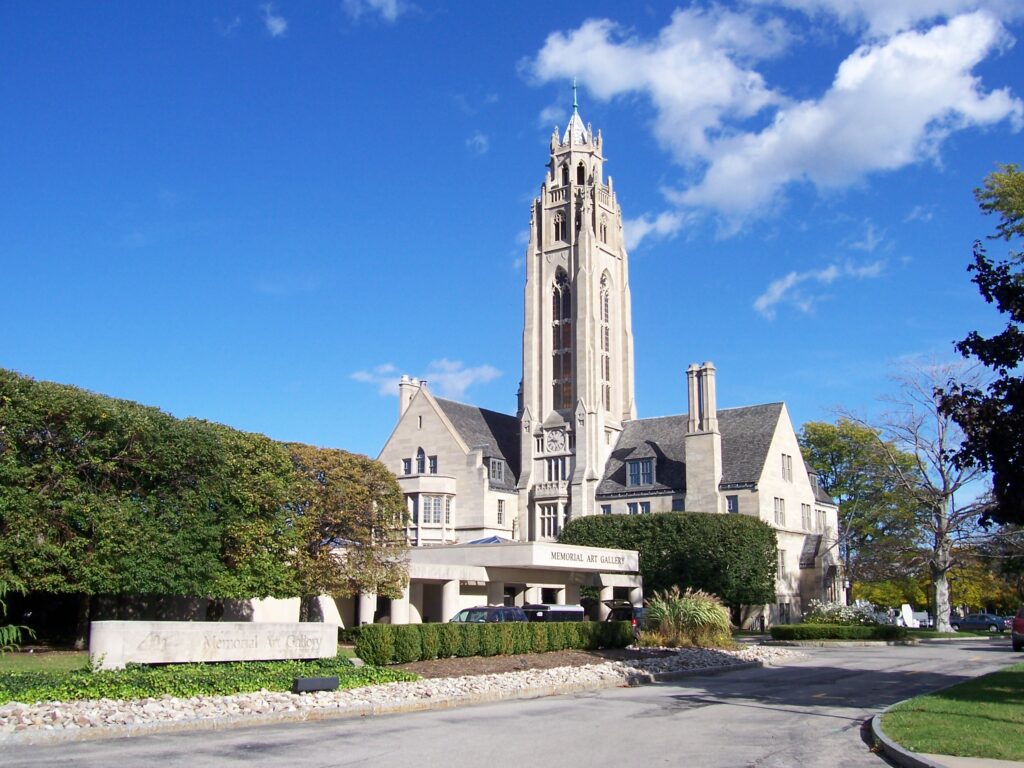
Featured image: Memorial Art Gallery in Rochester, photographed on 10 October 2009. Historical contextual view, not a photograph of the 2026 Clothesline festival or its award winners. Photo: DanielPenfield, “Memorial Art Gallery main entrance.JPG”, CC BY-SA 3.0. No editorial crop or retouching; automatic WordPress resizing.
